
A more powerful cleansing brush isn’t automatically a better choice for your skin. A silicone face brush can make cleansing feel more controlled, but it isn’t a shortcut to flawless skin or a guaranteed deeper clean. If you’re comparing a manual tool with a powered one, or wondering whether textured silicone might irritate sensitive skin, focus on how the brush fits your routine and feels in use.
This guide compares silicone face brushes by design, cleansing style, skin compatibility, and care. You’ll learn what these tools can and can’t do, how to use one gently, and which details to check before choosing. We’ll also look at the rechargeable LumiClean™ Sonic Silicone Facial Cleansing Brush and practical ways to pair a brush with a cleanser you already use.
Key Takeaways
- Compare a silicone face brush by its contact surface, handling, and care instructions, not claims of a deeper clean.
- Choose between manual control and a powered style based on what you’ll find comfortable and practical to use.
- Use a light touch on damp skin, and stop if irritation or persistent discomfort develops.
- Check the product instructions and care requirements before buying. LumiClean™ is a rechargeable option to consider.
What Is a Silicone Face Brush, and What Can It Add to Cleansing?
A silicone face brush is a cleansing tool with a silicone contact surface, often formed into small raised textures. You move it over the skin while cleansing. The cleanser helps lift away oil, sunscreen, makeup residue, and everyday buildup; the brush is an optional tool to use with it. Silicone comes in different forms and applications, as outlined in this overview of the properties of silicone.
Think of the brush as an optional change to how cleansing feels, not a skincare essential. It doesn’t guarantee clearer pores, treat acne, or replace a dedicated exfoliant. Cleansing and exfoliation are separate steps. Since a brush’s texture and movement create friction, use it gently instead of assuming that more pressure will improve the result.
How Does a Silicone Brush Differ from Hands or a Washcloth?
Hands offer direct control without an added textured surface. A washcloth provides a fabric surface, and its feel depends on its weave and how you use it. A silicone brush adds its own texture, which some people may prefer for the sensation or handling. None is universally best: your technique, pressure, cleanser, and skin tolerance all affect the experience.
A brush doesn’t remove makeup by itself or replace a suitable cleanser. If you wear makeup, remove it as needed before cleansing, then decide whether you prefer to wash with your hands, a washcloth, or a brush. If you already cleanse comfortably with your hands, there’s no need to add a tool unless you prefer how it feels.
Manual and Powered Silicone Brushes at a Glance
A manual brush moves only when you guide it, so you control its pace and pressure directly. A powered brush uses a device-assisted action; functions vary by product, so check the listing and instructions instead of assuming every model has the same settings. Luminous Touch offers the LumiClean™ Sonic Silicone Facial Cleansing Brush, a rechargeable option.
To compare manual and powered styles, consider how each feels to hold, whether charging would fit your routine, and how you’ll clean and store it. The product’s stated functions and instructions are more useful decision points than a general promise of a deeper clean. Whichever style you choose, keep pressure light and let the cleanser provide slip.
How to Compare Silicone Face Brushes Before You Buy
Product listings can make different brushes sound alike, so focus on details that affect everyday use. Check what material touches the skin, how the surface and texture are described, whether the design looks manageable to guide, and what the care directions require. If a listing names stimulation settings, treat them as a feature to evaluate against your own comfort, not as a measure of how well the brush cleans.
| What to compare | What to look for |
|---|---|
| Contact material | Check what material touches the skin and how the surface is described. |
| Operation | Manual means hand-controlled; powered means device-assisted. Review any stated functions. |
| Handling | Consider grip, shape, and whether the tool feels manageable to guide. |
| Care | Read product-specific cleaning, drying, and storage instructions. |
Which Brush Style Fits Your Cleansing Routine?
A manual brush may suit you if you want a simple tool and prefer to control every movement by hand. A powered model may appeal if device-assisted cleansing feels convenient, though charging and care become part of the routine. Ask yourself whether those steps make cleansing easier or add tasks you’re unlikely to keep up with. Sonic operation alone doesn’t guarantee a superior cleanse, so compare the stated functions and choose a style you’ll use comfortably.
What Should You Check About Material, Care, and Instructions?
Read the product description for its stated contact material and texture, then review the instructions before using the brush. If the product lists stimulation settings, consider whether the options sound comfortable for you. Follow the manufacturer’s directions for cleaning, drying, and storage rather than assuming all brushes need the same care. Use the brush with a suitable cleanser, such as Round Lab 1025 Dokdo Cleanser, rather than treating the tool as a substitute for cleanser.
Buying checklist: Look for clearly described materials and instructions, a shape you can guide comfortably, and a texture and operating style that suit your preferences.
For a routine-focused look at cleansing tools and skincare, explore Luminous Touch skincare essentials.
How to Use a Silicone Face Brush Gently and Keep It Clean
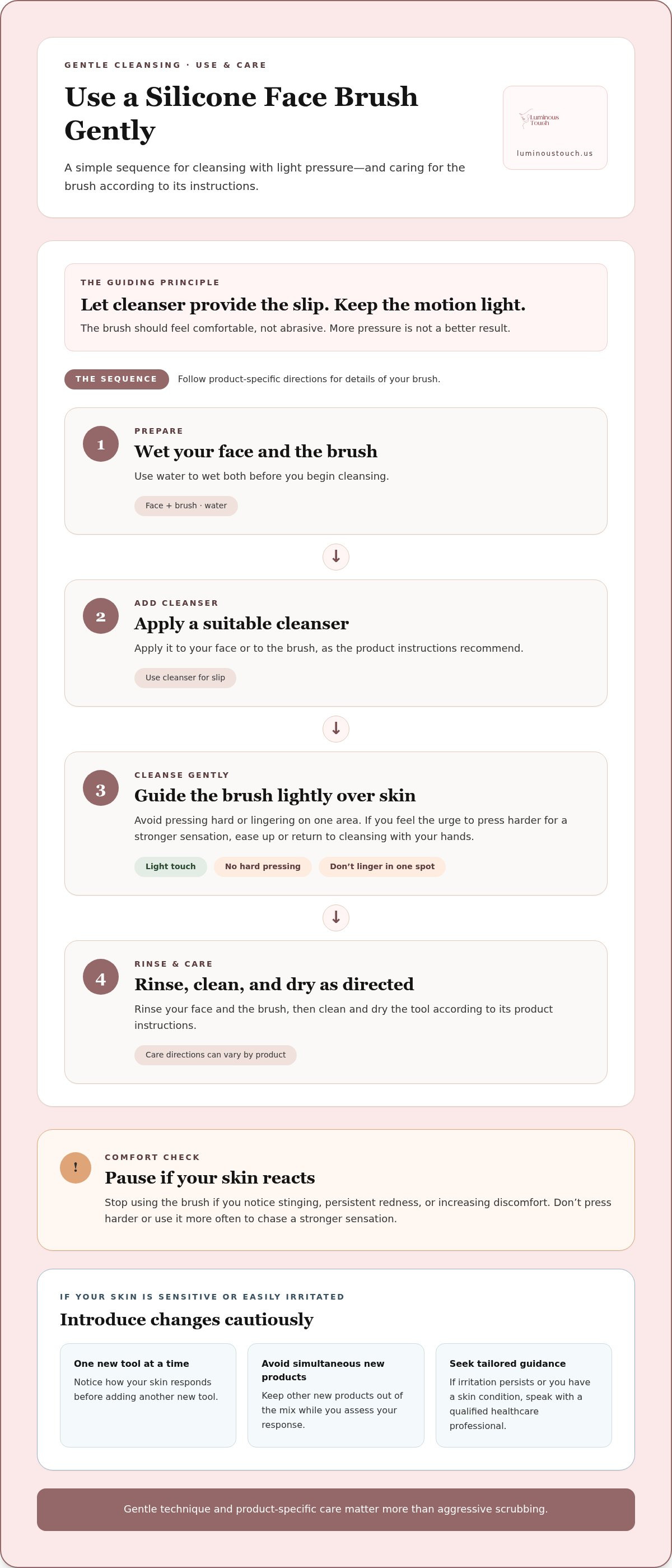
Keep the motion light and let the cleanser provide slip. A silicone face brush should feel comfortable, not abrasive. Follow this sequence, while using the product’s own directions for details specific to its design:
- Wet your face and the brush with water.
- Apply a suitable cleanser to your face or the brush, as its instructions recommend.
- Move the brush gently over the skin. Avoid pressing hard or lingering on one area.
- Rinse your face and brush, then clean and dry the tool as directed.
Gentle technique and product-specific care matter more than aggressive scrubbing. If you find yourself pressing harder to create a stronger sensation, ease up or return to cleansing with your hands.
Can Sensitive or Easily Irritated Skin Use a Cleansing Brush?
If your skin tends to react, proceed cautiously. Introduce one new tool at a time so you can notice how your skin responds, and avoid adding other new products at the same time. You don’t need to push through discomfort to make a brush part of your routine. If irritation persists or you have a skin condition, speak with a qualified healthcare professional for guidance suited to you.
When Should You Pause Brush Use?
Stop using the brush if you notice stinging, persistent redness, or increasing discomfort. Pause rather than pressing harder or using it more often to chase a stronger sensation. A cleansing brush is an accessory for washing, not a treatment for every concern related to skin texture. A simple cleanse also doesn’t promise a particular cosmetic result.
After each use, rinse away cleanser and residue, then follow the manufacturer’s cleaning and storage directions. Products can differ, so don’t assume they all need the same cleaning schedule or drying method. Check the care guidance before using the brush again, especially if residue remains around textured areas after rinsing.
Choose a gentle routine and a tool that feels manageable. Explore silicone cleansing tools to find an option for your routine.
Choosing a Silicone Face Brush That Fits Your Routine
A practical shortlist comes down to three things: the brush style you prefer, how your skin responds to its feel, and whether its care requirements fit your routine. A silicone face brush should answer a real preference, not add another step just because it promises more. Before choosing, consider how you currently cleanse, whether the texture seems manageable, and whether you’re prepared to follow the product instructions. If you are comparing different personal care accessories or stocking up on salon-grade essentials, dedicated beauty suppliers such as SG Beauty Care (Pty) Ltd provide a helpful benchmark for the kinds of tools available.
Is the LumiClean™ Brush a Fit for Your Routine?
The LumiClean™ Sonic Silicone Facial Cleansing Brush is an option if you’re considering a powered silicone brush. Its name identifies it as sonic and silicone, and describes it as rechargeable. Those details help you decide whether a device-assisted style fits your preferences and routine. They don’t determine how the brush will feel on your skin, so read its product instructions and consider your comfort before incorporating it.
A Simple Final Decision Checklist
Before choosing, pause and ask:
- Does this brush style fit how I already like to cleanse?
- Does the surface or any stated stimulation feel appropriate for my personal tolerance?
- Are the product’s use, cleaning, and storage instructions clear and manageable?
- Can I add the tool without disrupting the rest of my routine?
If you’re unsure, keep your routine simple and revisit the decision after reading the product directions. A brush is optional; it doesn’t need to replace your hands or a method that already feels comfortable. If a powered silicone style interests you, the LumiClean™ brush is one option to consider, or explore cleansing tools at Luminous Touch.
Make Your Next Cleansing Step Feel Intentional
A new tool should make your routine feel more considered, not more demanding. Before adding a silicone face brush, remember that your everyday cleansing method may already suit you. If you try a brush, pay attention to whether it feels comfortable and easy to maintain, rather than judging it by how intensive the experience seems.
Let your routine guide the decision. Choose a tool because it fits a genuine preference, and adjust or pause if the experience doesn’t feel right for your skin. Skincare doesn’t need to be complicated to feel thoughtful; a small, well-chosen addition can be enough.
If you’re ready to compare a powered silicone option with your current cleansing method, explore cleansing tools for your skincare routine.
Frequently Asked Questions
Are silicone face brushes good for your skin?
A silicone face brush may suit your skin, depending on your tolerance, technique, and the product’s instructions. Treat it as an optional cleansing aid, not a necessary step or a solution for acne or clogged pores. If your face feels tight or unusually sensitive after use, pause and reassess rather than pushing through. Stop if irritation persists.
Can you use a silicone face brush every day?
There isn’t one frequency that suits every person or brush. Follow the manufacturer’s directions for your specific product, and begin cautiously rather than assuming daily use is appropriate. Pay attention to how your skin feels afterward. If it becomes uncomfortable, take a break or reduce use, and don’t increase frequency to compensate for results you hoped to see.
Do silicone face brushes exfoliate your skin?
A silicone brush is primarily a cleansing tool, not the same as a dedicated exfoliating product or clinical exfoliating treatment. Its texture and movement can create friction and change how your skin feels after washing, but that doesn’t mean it provides controlled exfoliation. Keep your touch gentle, and don’t press harder to seek a smoother feel. Treat exfoliation as a separate routine decision.
How do you clean a silicone face brush?
Rinse your brush after use and follow the cleaning and storage directions supplied for that product. Instructions can differ, so don’t assume a universal cleaning schedule, drying method, or storage setup. Silicone doesn’t make a brush self-cleaning. If cleanser or residue remains around textured areas after rinsing, use the product’s care guidance to determine how to clean it properly.
Is a silicone face brush better than washing your face with your hands?
Neither method is automatically better for everyone. Hands may be the simplest choice if you prefer a minimal routine or find textured tools uncomfortable. A brush may appeal if you enjoy its feel and are willing to maintain it as directed. Let personal preference, skin tolerance, and care needs guide the decision. Washing with clean hands remains a suitable way to cleanse.
Explore the LumiClean™ Sonic Silicone Facial Cleansing Brush to see whether a rechargeable silicone brush fits your cleansing routine.