
A stronger-looking jawline doesn’t always start with a more intense facial workout. Learning how to tighten sagging jowls naturally without surgery means focusing on consistent sun protection and skincare. Ingredients such as retinol, peptides, and hyaluronic acid may help improve skin firmness and elasticity over time. Facial exercises may engage muscles, but evidence that they reduce sagging jowls is limited.
It’s understandable to hope a simple routine can restore a clearer jawline. What you can achieve depends partly on why jowls have formed: aging, genetics, sun exposure, and facial volume loss can all play a role. Topical care has limits when loose skin is more pronounced. This article explains common causes, what exercises and massage may realistically do, and how targeted skincare fits into a gentle, nonsurgical approach.
Key Takeaways
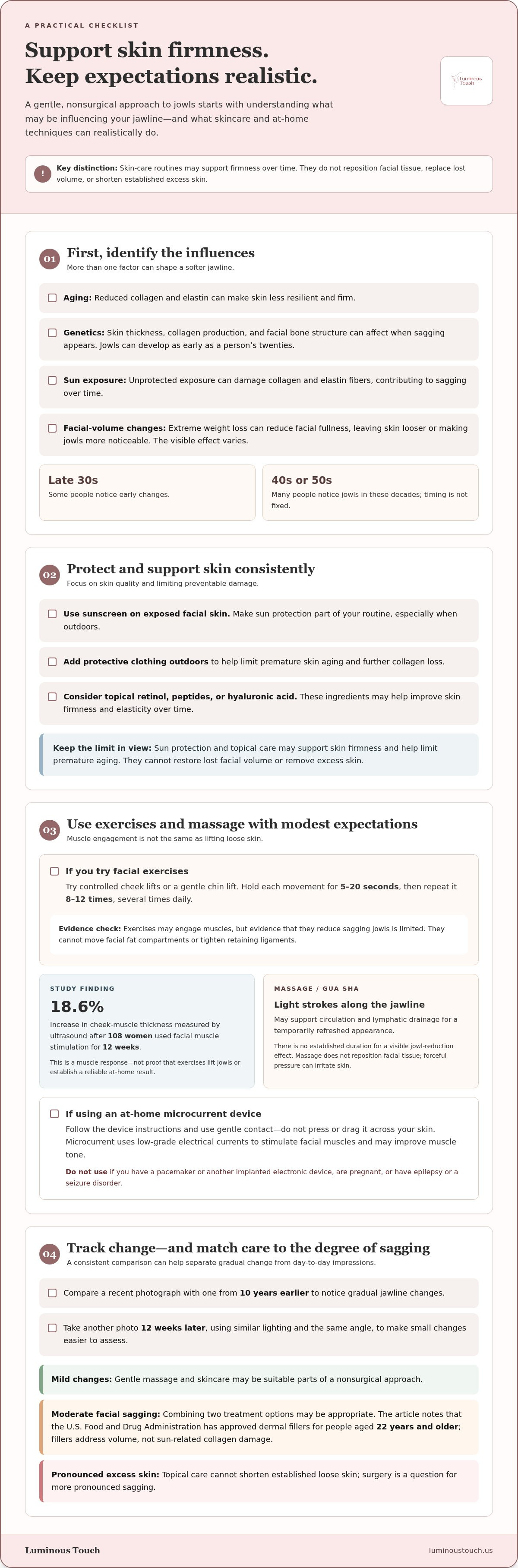
- Facial exercises may support muscle tone, but evidence that they reduce jowls is limited; use them with realistic expectations.
- Consider how aging, genetics, sun exposure, and facial volume changes may contribute to a softer jawline.
- Build a consistent skincare routine with sun protection and ingredients such as retinol, peptides, or hyaluronic acid to support skin firmness.
- Explore Dr. Melaxin Collagen Boosting Serum as a skincare option when adding collagen-focused care to your routine.
1. Do Facial Exercises for Jowls Really Work?
Facial exercises may support muscle tone, but evidence that they reduce sagging jowls remains limited. A practical approach to how to tighten sagging jowls naturally without surgery starts with realistic expectations: exercise can engage muscles, but can’t move facial fat compartments or tighten retaining ligaments. Try controlled cheek lifts or a gentle chin lift. Hold each movement for 5 to 20 seconds, then repeat it 8 to 12 times, several times daily.
Clinical evidence offers a useful distinction. A study followed 108 women using facial muscle stimulation for twelve weeks; ultrasound measured an 18.6 percent increase in cheek-muscle thickness, according to The study authors. A separate six-week comparison found a clear difference from the untreated group, while a dummy-device study also ran for six weeks. These findings concern muscle response, not proof that exercises lift jowls. They can inform expectations, but don’t establish a reliable at-home result.
Microcurrent therapy uses low-grade electrical currents to stimulate facial muscles and may improve muscle tone. With an at-home device, follow the instructions and use gentle contact rather than pressing or dragging it across your skin. People with a pacemaker or another implanted electronic device, people who are pregnant, and people with epilepsy or a seizure disorder should not use the device.
If you’re considering how to tighten sagging jowls naturally without surgery, match your approach to the degree of sagging. Mild changes may suit gentle massage and skincare; a device can’t shorten established excess skin, making surgery a question for more pronounced sagging. For moderate facial sagging, combining two treatment options may be appropriate. The U.S. Food and Drug Administration has approved dermal fillers for people aged 22 years and older.
2. What Causes Jowls to Form?
Jowls form as skin and supporting tissues change, softening the jawline’s contour. Aging reduces collagen and elastin, which help skin retain resilience and firmness. Genetics also influence skin thickness, collagen production, and facial bone structure, shaping when sagging may appear. Jowls can develop as early as a person’s twenties because of genetic traits and skin type. The same visible change can therefore have different causes for different people.
Sun exposure is another influence. Excessive exposure without protection can damage collagen and elastin fibers, contributing to sagging over time. Daily sunscreen and protective clothing help prevent premature skin aging and further collagen loss. Make these steps part of your routine, especially when outdoors. Protecting exposed facial skin addresses a preventable contributor, though it won’t change inherited traits or restore lost facial volume.
Weight changes can alter facial fullness, too. Extreme weight loss may make jowls appear earlier or more noticeable because losing facial fat can leave skin looser. The effect depends on how much facial volume changes and how well your skin retains elasticity. Age-related collagen loss, genetics, sun exposure, and reduced facial fullness may all shape the jawline. Weight loss isn’t the only cause, and the visible result varies with each person’s skin and facial structure.
Can sagging jowls improve naturally? Sun protection and skincare may support skin firmness and help limit premature aging, but they can’t replace lost volume or remove excess skin. These distinctions help set realistic goals: topical care supports skin quality, while structural changes may need a different treatment approach. A filler, for example, addresses volume rather than sun-related collagen damage, so the cause matters when considering options.
For a considered at-home routine, explore skincare and beauty tools alongside daily sun protection.
3. Age-related loss of collagen and elastin
Collagen and elastin help skin maintain structure and flexibility. As aging reduces these supportive proteins, skin can become less elastic, and the jawline may look softer. Some people notice early changes in their late 30s; many notice jowls in their 40s or 50s. These age ranges describe common experiences, not a fixed timetable. The pace and visible effect differ with inherited traits, skin history, and changes in facial volume.
Consider how reduced elasticity affects the appearance of jowls. Skin that once followed the jawline closely can become looser as its support changes. A loss of facial volume can also make surrounding skin look less taut, changing the contour even without a dramatic shift in the skin itself. These processes can overlap. Distinguishing loose skin from reduced volume helps clarify whether skincare may support your appearance or whether sagging is more pronounced.
Daily sun protection is a practical step for limiting further collagen loss. Apply sunscreen to exposed facial skin and add protective clothing when outdoors. Unprotected sun exposure damages collagen and elastin fibers, contributing to premature skin aging. This routine won’t restore support already lost, but it helps protect skin from an avoidable source of ongoing damage. Consistent use matters, especially on the face and neck.
Track change with photographs rather than relying only on memory. Compare a recent image with one from 10 years earlier to notice gradual shifts in the jawline. Then take another photo twelve weeks later under similar lighting and from the same angle. To view your jawline clearly against a neutral backdrop without visual clutter, you can use removephotobg.com to isolate your portrait. This makes small changes easier to assess. For pronounced excess skin, topical care cannot shorten the tissue; that degree of sagging is a surgical question, unlike early changes in skin firmness.
4. Topical retinol, peptides, and hyaluronic acid
Topical retinol, peptides, and hyaluronic acid may help improve skin firmness and elasticity over time. They support the appearance and feel of skin, not lift facial tissue or replace lost volume. That distinction matters: a softer jawline can reflect changes beneath the skin, while topical care works at its surface. Set a realistic goal, such as a smoother-looking complexion, rather than expecting an at-home product to reposition cheeks or remove excess skin.
Build a simple routine around one product at a time. Check its ingredient list for retinol, peptides, or hyaluronic acid, then apply it as directed on the label. Use it consistently and observe how your skin responds before adding another active. This makes it easier to identify which products suit your routine. Avoid layering several new formulas at once, since it can be harder to tell what’s helping or causing discomfort.
Retinol, peptides, and hyaluronic acid aren’t interchangeable. Choose based on the skin concern you want to address, then give your routine time to become consistent. Pair topical care with daily sun protection, since unprotected exposure can damage collagen and elastin. Skincare can support skin quality, but it won’t reverse facial volume changes caused by aging or weight loss. Nor can it shorten pronounced sagging skin, which may require a different procedure.
Use your jawline and cheeks as reference areas when assessing your appearance. Take a photo in consistent lighting, then compare it with another after maintaining your routine. Look for changes in skin texture and visible firmness, not a dramatic lift. If your main concern is loose tissue or a changed facial contour, topical ingredients have clear limits. The key point is simple: skincare supports the skin’s surface, while the cause of sagging shapes what results are realistic.
Explore skincare options for a consistent routine and choose products that align with your skin goals.
Luminous Touch: Dr. Melaxin Collagen Boosting Serum
Dr. Melaxin Collagen Boosting Serum from Luminous Touch offers a topical option for a collagen-focused skincare routine. Consider it when your goal is to care for skin quality at home, alongside daily sun protection and consistent skincare. A serum can complement your routine, but topical care doesn’t reposition facial tissue or remove excess skin. Keep expectations aligned with the cause of your jowls.
Use the product as directed on its packaging and introduce it thoughtfully into your existing routine. If your main concern is pronounced sagging rather than skin texture, a serum may not address the underlying change. Choose products according to your skincare goals and prioritize gentle, consistent care over expecting a quick jawline transformation.
Visit Luminous Touch to explore the Dr. Melaxin Collagen Boosting Serum.
Choose a Routine That Fits Your Skin Goals
Your next step is to choose a routine you can maintain, with goals grounded in what topical care and at-home devices can address. If you're considering how to tighten sagging jowls naturally without surgery, focus on supporting skin quality rather than expecting a dramatic lift. Consistency and clear priorities make it easier to select products that complement your daily care.
Luminous Touch offers Dr. Melaxin Collagen Boosting Serum, Dr. Melaxin Radiance Boost Rice Peeling Ampoule, and the 5-in-1 Face Sculpting & Skin Care Device. These options can help you shape an at-home beauty routine around your interests, without changing the realistic limits of non-surgical care. Choose the approach that feels appropriate for your skin and your preferred routine.
Explore skincare and beauty devices at Luminous Touch, and take your next step with calm confidence.
Frequently Asked Questions
What Causes Jowls to Form?
Jowls can reflect several changes working together, including reduced skin elasticity, inherited facial structure, sun exposure, and shifts in facial fullness. For example, after substantial weight loss, reduced facial fat may leave skin looking looser along the jaw. Noticing when the contour changed, and whether your weight or sun exposure changed too, can help identify factors that may be contributing.
At what age should I start treating jowls?
There’s no single age to begin caring for your jawline. Jowls may appear as early as a person’s twenties because of genetics and skin type, while others notice changes later. Start with prevention rather than a fixed age: apply daily sun protection along the jaw and neck, and build a skincare routine suited to your skin. Consider changes in your own skin, not someone else’s timeline.
Can Exercise Help Sagging Jowls?
General exercise supports overall fitness, but it can’t selectively strengthen the skin or remove facial fat around the jaw. Facial movements may engage muscles, yet they don’t address every cause of jowls, especially reduced elasticity or lost volume. If you exercise regularly, treat it as part of overall wellness, not a targeted jawline-lifting method. Track facial changes separately from changes in body weight.
Do Facial Exercises for Jowls Really Work?
Facial exercises can engage cheek and jaw muscles, but evidence that they reduce sagging jowls is limited. If you try them, use controlled movements rather than forceful pulling, and stop if they cause discomfort. A cheek lift or gentle chin raise offers a simple way to practice engaging the muscles. Judge results with consistent photographs, not by a momentary feeling of tightness after exercise.
How long do results last?
There isn’t one reliable duration for results from facial exercises or massage. A temporarily refreshed appearance after massage differs from lasting changes in skin laxity or facial structure. The effect depends on the method, the cause of sagging, and whether the approach changes your appearance temporarily or addresses tissue support. Maintain a consistent routine, then compare photographs taken in similar lighting to assess visible changes over time.
Do skincare ingredients like retinoids, peptides, or vitamin C improve jowl firmness?
Retinoids, peptides, and hyaluronic acid may help improve skin firmness and elasticity over time, supporting a smoother-looking appearance. They can’t reposition facial tissue or restore lost volume. For a practical routine, introduce one active product at a time and follow its label directions while maintaining daily sun protection. Vitamin C can be part of skincare, but don’t rely on it to lift jowls.