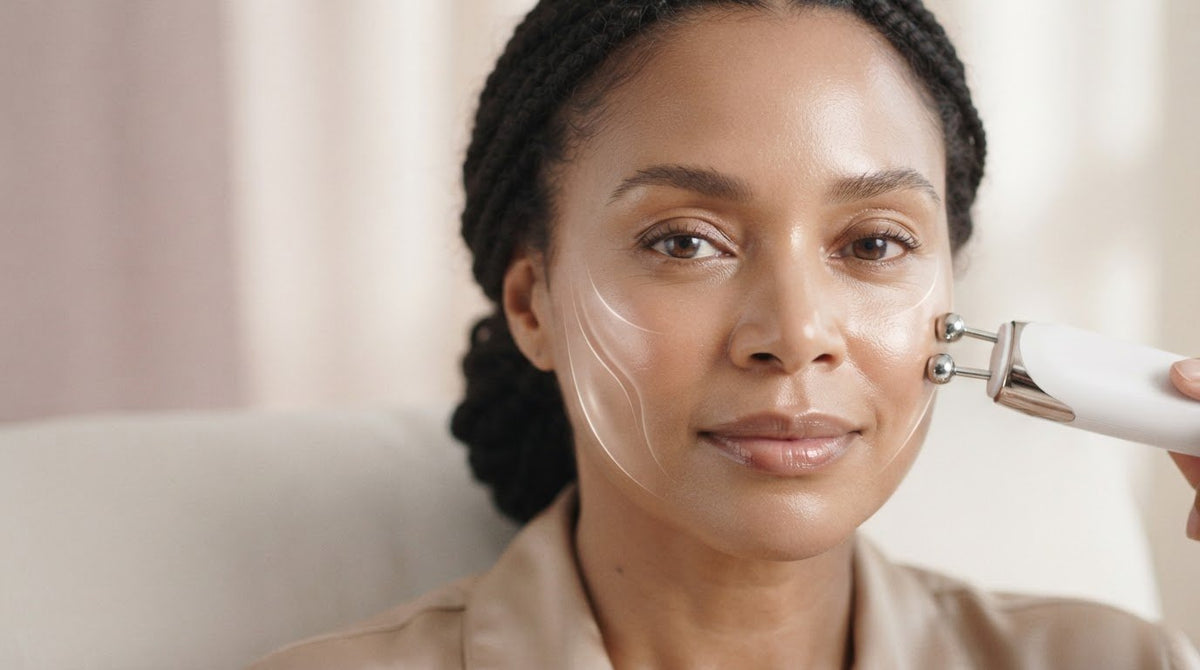
Professional microcurrent and nanocurrent treatments are not expected to cause facial fat loss, but low-current procedures also are not expected to tighten skin. If you’re wondering whether microcurrent can cause facial fat loss, the clearest answer is that its low current is not expected to remove facial fat.
It’s understandable to feel concerned when you hear about someone noticing facial volume changes after a treatment. The timing can raise questions, but it doesn’t prove that microcurrent caused the change. This guide explains what a reported case can and can’t tell you, how low-current treatments relate to skin tightening, and which risks to consider before a facial treatment.
You’ll also see why facial fat loss and a firmer-looking complexion are different outcomes, and how to think about at-home sculpting devices in that context. The goal is to clarify what microcurrent may offer, what it doesn’t do, and when another approach may better match your desired result.
Key Takeaways
- Professional microcurrent and nanocurrent procedures are not expected to cause facial fat loss, but they also aren’t a skin-tightening treatment.
- A change noticed after a treatment doesn’t, on its own, establish that the treatment caused it; consider the timing and the type of procedure involved.
- One reported patient noticed facial fat loss after four microcurrent treatments over a few months, while a surgeon described skin crepiness appearing 1-2 years after other noninvasive treatments.
- Before choosing a facial treatment or at-home device, clarify whether your priority is skin appearance, facial volume, or both, since these are different concerns.
Can professional microcurrent/nanocurrent procedures cause facial fat loss?
Dr. Leonard Grossman states that low-current procedures will not cause facial fat loss. That directly addresses concerns about professional microcurrent and nanocurrent treatments.
A reported patient noticed facial fat loss after four microcurrent treatments over a few months. Her facial fat-grafting result had lasted for years before treatment. That timing is notable, but it doesn’t establish that microcurrent caused the change. A change noticed after treatment and a change caused by treatment are not automatically the same thing.
For comparison, microcurrent uses low-level electrical stimulation. Radiofrequency, ultrasound, and facial massage use different methods, so the information about microcurrent doesn’t establish their relative fat-loss risks. Don’t assume these approaches are interchangeable or that reported effects of one method predict those of another.
The reported case describes noticed fat loss, but doesn’t establish whether it was permanent or temporary. A visible change after treatment alone cannot determine its cause or duration. The patient’s earlier fat grafting is also relevant context.
In the United States, professional treatment costs depend on the clinic, treatment area, and session plan. At-home costs depend on the device selected. Because these factors vary, no single figure applies to both options.
Thin or aging skin doesn’t, by itself, determine whether microcurrent is suitable. The finding about low current and fat loss doesn’t establish safety for every skin type. Skin condition and the treatment approach matter when weighing suitability.
Implants and medical conditions also matter when considering electrical stimulation. Someone with an implanted device or a relevant medical condition shouldn’t treat the low-current finding about fat loss as proof of personal safety. Suitability depends on the specific device and health circumstances.
Keep the decision focused: distinguish concerns about facial volume from concerns about skin appearance, and consider treatment history, including prior fat grafting. This context can help prevent a coincidental change from being mistaken for a proven treatment effect.
Microcurrent and nanocurrent procedures
Microcurrent and nanocurrent treatments use devices that deliver low-level electrical current through skin-contact electrodes. During a professional facial, a practitioner moves the treatment heads across selected areas, such as the cheeks or jawline. The device and technique shape the experience; the terms alone don’t describe every treatment detail.
During a session, the electrodes need to contact the skin to deliver current. A conductive medium may help maintain contact and let the treatment heads glide. The practitioner directs them along facial contours rather than treating the face as one undifferentiated surface. For example, movements over the cheeks and jawline may follow separate paths.
Nanocurrent and microcurrent are related labels, but a name doesn’t tell you exactly how a specific device operates. Device design, settings, electrode placement, and the practitioner’s movements all contribute to the procedure. That’s why the treatment name alone can’t explain what happened during an individual session.
To understand a treatment record, identify the device, the areas treated, and the session dates. Those details provide more context than a broad label such as “facial toning.” If someone notices a change afterward, a timeline can help distinguish the treatment date from other relevant events, such as a prior facial procedure.
- Device: Note whether the procedure used microcurrent or nanocurrent terminology.
- Technique: Record which facial areas the practitioner treated and how the electrodes moved.
- Timing: Keep session dates alongside when a visible change first appeared.
These notes don’t prove cause, but they make the sequence clearer. They also help distinguish a device’s stated purpose from an individual result. A facial procedure described as sculpting, toning, or lifting should be understood through its actual method, treatment area, and observed outcome, not its promotional label alone.
When comparing treatments, focus on what the procedure applies to the skin and how it’s performed. Microcurrent and nanocurrent describe current-based approaches; they aren’t interchangeable with every facial device or technique. Clear terminology supports a more informed conversation about the treatment itself.
Skin tightening
Dr. Leonard Grossman states that low-current procedures will not help with skin tightening. That distinction matters if your goal is firmer-looking skin rather than a different facial contour. A treatment’s “lifting” or “toning” label doesn’t establish that it tightens skin.
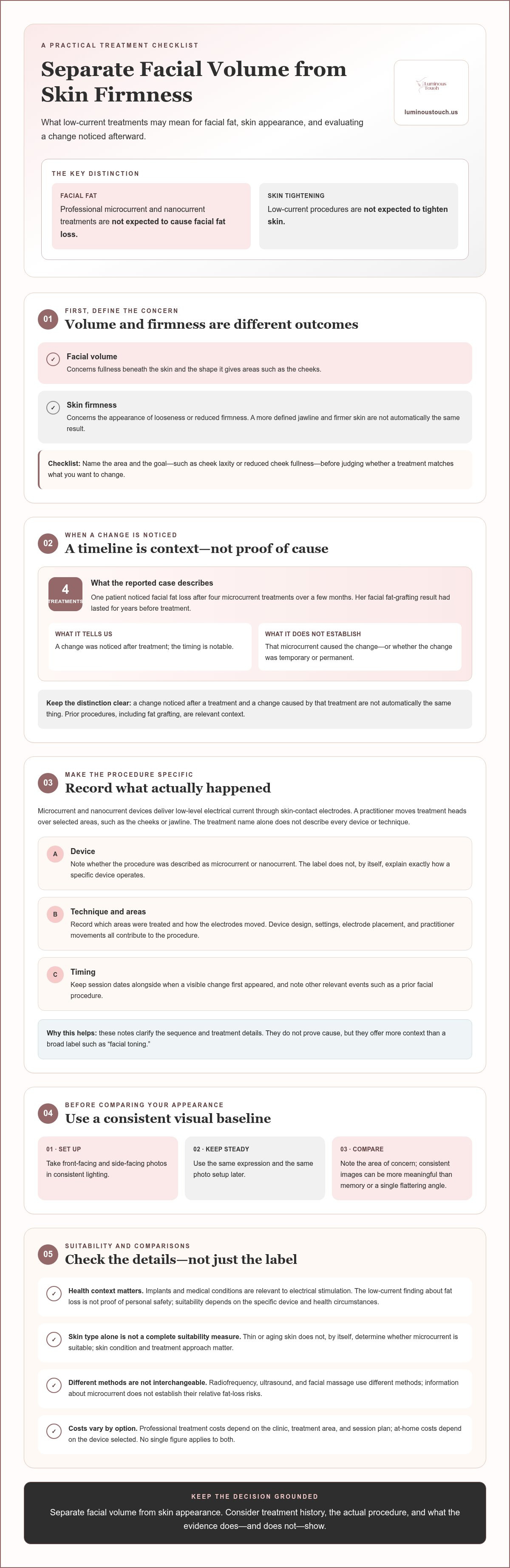
Skin tightening describes an improvement in the appearance of looseness or reduced firmness. Facial volume is different: it concerns fullness beneath the skin and the shape it gives areas such as the cheeks. A more defined-looking jawline and firmer skin are not automatically the same result. Naming your priority helps prevent one goal from being mistaken for another.
Set a clear baseline before comparing your appearance. Take front-facing and side-facing photos in consistent lighting, with the same expression. Note the area that concerns you, such as cheek laxity or reduced cheek fullness, then repeat the same photo setup later. This can make visual comparisons more meaningful than relying on memory or a single flattering angle.
Assess claims by the treatment’s actual method, not its advertised outcome. For example, a microcurrent facial uses low-level current, while “skin tightening” describes a desired appearance. Those terms alone don’t demonstrate that the procedure delivers that result. Ask whether the stated goal is contour, skin appearance, or both, and keep those outcomes distinct.
If facial firmness is your main concern, don’t treat microcurrent as a proven skin-tightening solution. Grossman’s statement addresses low-current procedures and tightening, not every possible facial treatment or individual result. A sensible decision starts with the specific change you want, the area involved, and the method being considered. For example, assess loose-looking skin separately from cheek volume. This distinction also helps you interpret claims without assuming that a more sculpted appearance means tighter skin, or that skin tightening means fat loss. A precise goal makes treatment descriptions easier to evaluate.
What side effects and risks are associated with microcurrent facial treatments?
Reported concerns deserve careful context. One patient noticed facial fat loss after four microcurrent treatments over a few months. The sequence is worth discussing, but timing alone doesn’t prove the treatment caused the change. A treatment history can clarify what happened and when.
A plastic surgeon also described patients returning 1-2 years after noninvasive treatments with increased skin crepiness. The surgeon attributed that appearance to subcutaneous fat destruction. This is a reported clinical observation, not proof that microcurrent caused those changes. The treatments described were noninvasive, and the report doesn’t identify microcurrent as their cause.
These accounts don’t establish how often facial changes occur after microcurrent or whether a specific change will persist. They also don’t identify every possible side effect. Avoid turning an individual report into a prediction for every person or device. The treatment type, areas treated, and timeline all matter when interpreting a concern.
If you notice a change, take these practical steps:
- Write down the date of each session and the facial areas treated.
- Note when you first observed the change, such as reduced cheek fullness or crepey-looking skin.
- Take consistent photos, using similar lighting, angle, and facial expression.
- Record other relevant procedures, including prior fat grafting, and share the timeline during a medical evaluation.
Records can help distinguish an observed change from assumptions about its cause. For example, a photo taken before treatment offers a clearer comparison than memory alone. Seek medical evaluation for a new or concerning facial change. Photos and dates provide useful context, but they cannot diagnose its cause.
For a considered at-home beauty routine alongside your treatment research, explore skincare and beauty tools.
Luminous Touch: Dr. Melaxin Collagen Boosting Serum
Dr. Melaxin Collagen Boosting Serum from Luminous Touch offers a skincare option for a collagen-focused routine. It’s a topical serum, not a microcurrent treatment, and shouldn’t be presented as a way to prevent facial fat loss or tighten skin.
Choose products according to your skincare goals, keeping them distinct from procedures that use electrical current. For a device-based option, Luminous Touch also offers the 5-in-1 Face Sculpting & Skin Care Device. Its product name describes its category, but doesn’t establish that it replaces professional care or produces a particular result.
For facial volume changes or concerns after treatment, skincare products aren’t a substitute for medical evaluation. To explore the serum and other skincare options, visit luminoustouch.us.
Choose Your Next Skincare Step With Clarity
If wondering whether microcurrent can cause facial fat loss has prompted you to rethink your routine, start by naming the result you want. A skincare routine, an at-home device, and evaluation of a facial change serve different purposes. Keeping those goals separate can help you make a more considered next choice.
For at-home skincare, Luminous Touch offers Dr. Melaxin Collagen Boosting Serum and Dr. Melaxin Radiance Boost Rice Peeling Ampoule. The 5-in-1 Face Sculpting & Skin Care Device is another option in its beauty-device range. These offerings can help you explore a personal routine, but they don’t replace medical evaluation for a concerning facial change.
Choose products and tools according to your routine, not as a promise of fat loss prevention or skin tightening. For a closer look at these skincare and device options, explore Luminous Touch. A thoughtful next step can keep your beauty choices aligned with what matters to you.
Frequently Asked Questions
Can microcurrent facial treatments cause facial fat loss or fat atrophy?
Low-current microcurrent treatments aren’t expected to cause facial fat loss. Dr. Leonard Grossman states that low-current procedures won’t cause it. If you notice reduced fullness, record when it appeared and which areas changed. For example, note whether the change affects one cheek or both, and whether it followed another facial procedure. That record can help clarify the timeline during a medical evaluation.
What evidence exists that microcurrent devices reduce facial fat?
The available accounts don’t establish that microcurrent devices reduce facial fat. One patient noticed a change after four treatments over a few months, following a fat-grafting result that had lasted for years. Separately, a surgeon described crepey skin appearing 1-2 years after noninvasive treatments, which the surgeon attributed to fat destruction. That report doesn’t identify microcurrent as the cause.
How does facial microcurrent work and what tissues does it affect?
Facial microcurrent applies low-level electrical current through skin-contact electrodes. The label describes the treatment method, not proof that it removes facial fat or tightens skin. For instance, electrodes moved over the cheeks deliver current at the skin’s surface. Don’t infer from that movement alone that deeper tissues have been damaged or that facial volume will change.
Can at-home microcurrent devices cause facial volume loss?
Low-current microcurrent treatments aren’t expected to cause facial fat loss, but that statement shouldn’t be treated as a guarantee for every device or use. At-home devices can differ in design and instructions. Read the specific device guidance, use it only as directed, and stop if you experience a concerning change. Record when it occurred and which facial area was affected to support a clearer assessment.
How does microcurrent compare with radiofrequency, ultrasound, and facial massage for fat loss risk?
Microcurrent uses low-level electrical stimulation, while radiofrequency, ultrasound, and facial massage use different methods. The information here doesn’t establish their relative fat-loss risks, so don’t assume their effects are interchangeable.
What does research say about permanent versus temporary facial changes after microcurrent?
The reported case describes facial fat loss noticed after microcurrent treatments, but doesn’t establish whether the change was permanent or temporary. The patient’s prior fat grafting is relevant context.