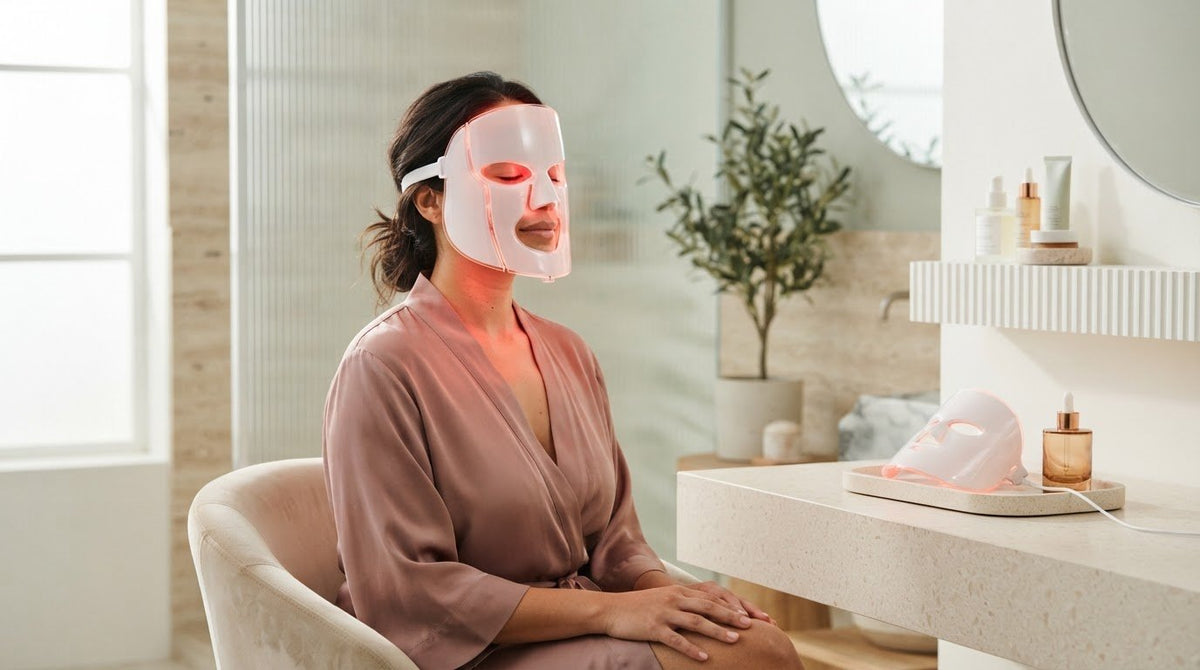
Could the most useful at-home LED light therapy mask be the one with the clearest specifications and instructions, rather than the most colors or features? Choosing a device can feel confusing when wavelengths, eye comfort, and safety guidance vary. Impressive claims don’t always explain what a realistic routine involves.
Look for a mask that fits your skincare goals and feels comfortable enough to use consistently. This guide explains how LED colors and wavelengths differ, which device details and directions to review, and why results, if they occur, are generally gradual rather than instant. You’ll also find practical considerations for skin sensitivity and eye comfort, so you can approach at-home use with care instead of guesswork.
We’ll cover the key questions to consider before choosing a mask, then outline how to build a simple, repeatable routine around the directions for your specific device, including the LED Light Therapy Face Mask for At-Home Glow Routine from Luminous Touch.
Key Takeaways
- Match an at-home LED light therapy mask to your skincare goals, and look beyond color names to the device information that explains its light settings.
- Read evidence carefully: findings tied to a particular device or setup shouldn’t be treated as a promise for every mask.
- Use the device manual to guide session length and frequency, and consider comfort and routine fit before committing to regular use.
- Explore the LED Light Therapy Face Mask for At-Home Glow Routine as one option, using its product page for details specific to the device.
What Is an At-Home LED Light Therapy Mask, and What Can It Do?
An LED mask is a wearable device that delivers light to facial skin according to its design and directions. An at-home LED light therapy mask uses light as its central method, while topical skincare products are applied to the skin. They serve different roles in a skincare routine and aren’t interchangeable. The term Light therapy covers a broad range of applications, so general information about light exposure doesn’t establish what every facial mask can do.
Think of a mask as a device with its own settings and usage guidance, not a one-size-fits-all treatment. Masks can differ in design, light categories, specifications, and instructions. Review the product’s own information to understand its features and how it is intended to be used. A label alone can’t promise a particular skin result.
What do red and near-infrared light labels mean?
Red and near-infrared describe categories of light, not guaranteed outcomes. Wavelength is one specification that helps characterize the light a device emits, but it doesn’t tell the whole story about a particular mask or establish that it will produce a specific effect. Other specifications and the manufacturer’s directions matter, too. When comparing masks, review each product’s published details rather than assuming similar color labels mean the devices work identically.
Who might consider an at-home LED mask?
A mask may appeal to someone who wants to add a light-based device to a considered home skincare ritual. Those focusing on mature skin or targeted eye treatments can look to specialized device creators like RadiantSkinAfter40 to see how different designs address specific needs. Start with your goals: what do you want to add to your routine, and can you follow the product directions consistently? Comfort matters, too. A device that’s difficult to wear may not fit your habits. Experiences vary, and guidance differs by product. An at-home mask isn’t a replacement for medical care or advice about a skin concern.
How LED Light Therapy Is Discussed, and What the Evidence Can Support
Photobiomodulation is a term used to describe biological responses to exposure to light. It gives researchers a framework for studying light, but it isn’t a guarantee that a particular mask will produce a particular skin change. For an overview of the topic and its limits, see Harvard Health Publishing’s Red light therapy for skin care.
Evidence needs context. A study’s results relate to the device, light settings, participants, and treatment schedule researchers examined. They don’t automatically apply to other products or everyone using an at-home LED light therapy mask. Evidence for one device cannot validate another unless its specifications, exposure conditions, and use protocol are sufficiently comparable. Even then, the study’s population and limitations still matter.
Why device specifications matter when reviewing claims
Assess wavelength, exposure, and treatment protocol as distinct details. Wavelength describes a property of the light; exposure concerns the light delivered during use; the protocol sets out how often and how long participants used a device. A study may examine a specific group under a defined schedule, so its findings may not generalize to other people or products. Look for research that identifies its device and methods, and don’t assume its outcomes apply to a mask without relevant product evidence.
Can an at-home mask replace professional or medical care?
No consumer skincare device should be treated as a way to diagnose or manage a medical condition. At-home and professional devices aren’t automatically equivalent: their specifications, use conditions, and oversight may differ. If you have a persistent skin concern or a specific skin condition, seek advice from a qualified medical professional rather than relying on a mask. For everyday skincare, keep expectations measured and use the product only as directed. Readers exploring a gentle home routine can also browse Luminous Touch’s at-home skincare range.
How to Choose and Use an At-Home LED Light Therapy Mask
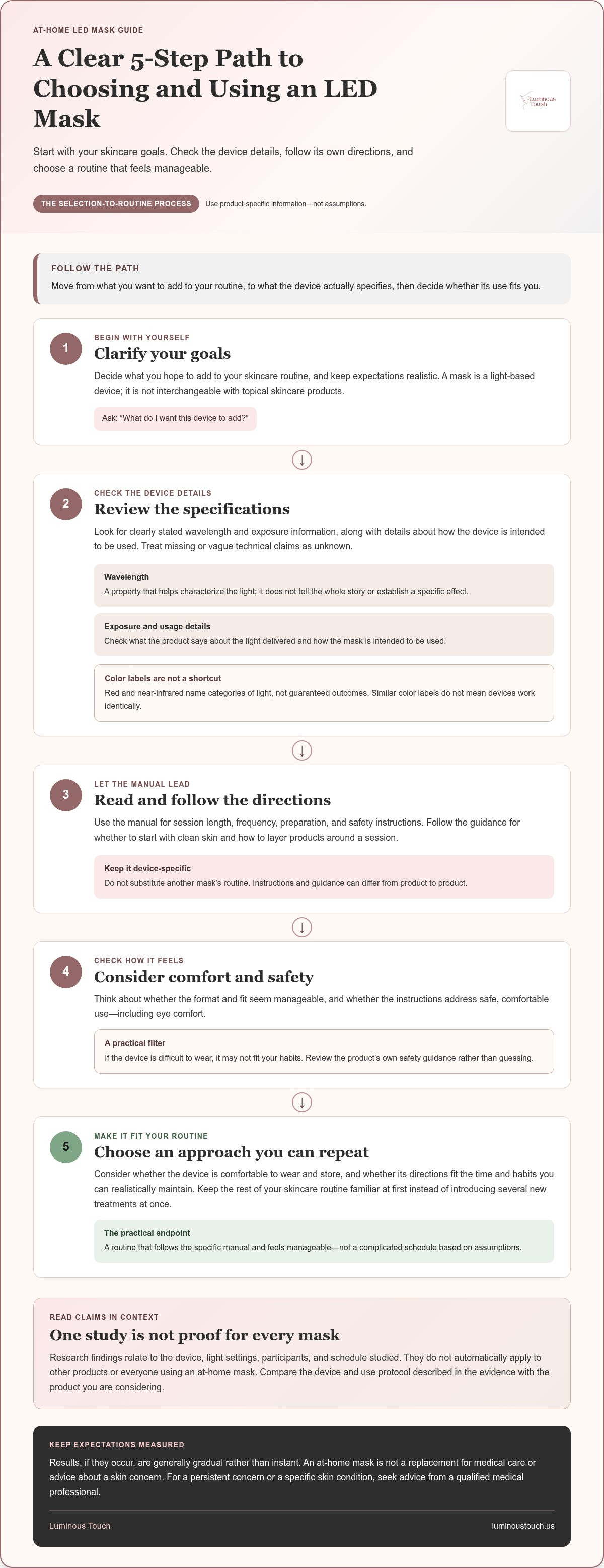
Start with your goals, then narrow your options to a device you can understand and use comfortably. This checklist helps you compare masks without relying on broad marketing promises.
- Clarify your goals. Decide what you hope to add to your skincare routine, while keeping expectations realistic.
- Review the specifications. Look for clearly stated wavelength and exposure information, plus details about how the device is intended to be used.
- Read the directions. Follow the manual for session length, frequency, preparation, and safety instructions. Don’t substitute another mask’s routine.
- Consider comfort. Check whether the device’s format and fit seem manageable, and whether its instructions address safe, comfortable use.
- Assess routine fit. Choose an approach you can repeat consistently without making skincare feel complicated.
For another grounded overview of device use and considerations, see the Cleveland Clinic’s LED Light Therapy: How It Works. Explore at-home skincare tools to find options for a considered routine.
What should shoppers compare before choosing a mask?
Compare what each product clearly states about wavelength, exposure guidance, fit, and safety instructions. If a technical claim is absent or vague, treat it as unknown rather than filling in the gap with assumptions. Then consider practical details: is the device comfortable to wear and store, and do its directions fit the time and habits you can realistically maintain?
How can an LED mask fit into a skincare routine?
Follow the manual’s guidance on whether to start with clean skin and how to layer products around a session. Keep the rest of your routine familiar at first instead of introducing several new treatments at once. That makes it easier to notice irritation or discomfort. Stop using the mask if discomfort occurs, and seek suitable professional guidance when needed. For daytime care, include daily broad-spectrum sunscreen as part of your usual sun-protection routine.
Luminous Touch LED Mask: Next Step for At-Home Care
The LED Light Therapy Face Mask for At-Home Glow Routine is Luminous Touch’s at-home option for shoppers considering an LED device as part of their skincare habits. To decide whether it suits your goals, use the product information and device manual as your guide. Don’t assume its light settings or routine from the product category alone.
A good fit is a device you understand and can use as directed. Compare the information provided for this mask with your priorities: the light specifications relevant to your goals, the instructions for use, and any guidance about comfort and safe handling. Then consider whether the recommended routine works with your day-to-day schedule. No mask can promise the same experience or result for every user.
What to review on the product page before building a routine
Before use, read the product page and manual together. Note the stated specifications, what the device is designed to do, and any preparation or safety guidance. Use any stated wavelength or exposure information to understand the device; follow its directions for session length and frequency. These details should inform your choice, not assumptions based on another mask or a general online routine.
Check that the instructions make sense for your comfort level and skincare habits. Follow the device-specific directions rather than increasing use or borrowing settings from another product. If you experience discomfort, stop using the mask and seek suitable professional guidance when needed. Keep expectations measured: product information can help you understand how to use a device, but it doesn’t guarantee a particular outcome or establish equivalence with professional care.
With its role and directions clear, you can decide whether this at-home LED light therapy mask belongs in a simple, repeatable self-care routine. Explore the Luminous Touch collection to browse at-home care options.
Make Your Next Step a Gentle, Informed One
Begin with a clear intention, not a promise of transformation. Decide what you hope to explore, then pay attention to practical details: whether the device feels comfortable, whether its instructions work with your habits, and whether you can use it as directed. Keep other parts of your skincare routine steady while you get familiar with the mask. A simple note about use and comfort can help you decide whether the routine feels worthwhile, without mistaking personal impressions for proof of a particular result.
If the Luminous Touch LED Light Therapy Face Mask for At-Home Glow Routine is on your shortlist, use its product information as your guide and let your own goals shape the decision. An at-home LED light therapy mask should feel like a considered addition to self-care, not another source of pressure. Explore at-home skincare devices and choose a routine that feels calm, realistic, and easy to make your own.
Frequently Asked Questions
Is an at-home LED light therapy mask effective?
It may be useful for some skincare goals, but effectiveness depends on the device, its settings, how it’s used, and the concern you’re considering. A result reported for one model isn’t proof that another will perform the same way. Before choosing, look for product details that match your priorities. If a skin issue persists or worries you, get advice from a qualified professional.
How often should you use an LED light therapy mask?
Use it as often as the specific device instructions recommend, since masks don’t all share one schedule. Don’t extend a session or add extra days because another user online follows a different routine. Follow the manual and note whether you’re using the device comfortably. If use feels uncomfortable, pause rather than pushing through; seek appropriate advice if the concern continues.
Can you use an LED face mask with skincare products?
Are at-home LED face masks safe for your eyes?
Eye precautions vary by device, so there isn’t one rule that applies to every mask. Read the instructions for guidance about positioning or eye protection, and don’t assume a design protects your eyes unless its directions say so. Stop if the light causes discomfort. If you have an eye condition or another relevant concern, consult a healthcare professional before using the device.
How long does it take to see results from an LED mask?
There’s no universal timeline, and a particular result isn’t guaranteed. Your experience may depend on the mask, how closely you follow its instructions, and individual factors. Be cautious about claims that promise a fixed timeframe without evidence for that specific device. If you choose to use a mask, follow its directions and assess your expectations calmly rather than increasing use in pursuit of faster changes.