Choosing between toners is easier when you focus on texture and listed ingredients rather than the biggest promise on the label. If product descriptions sound alike, compare how each formula might feel, what its directions say, and whether it fits the routine you already have.
Luminous Touch’s toner listings offer different ingredient cues: TIRTIR Milk Skin Toner lists 2% niacinamide, Rice Glow Milky Toner lists 70% rice water and ceramide, and Hydrating Turmeric Facial Toner lists glycerin, panthenol, and sodium PCA. These details can help you narrow your options, but they don’t establish how a formula will feel or whether it’s right for you.
This guide explains how to compare texture, disclosed ingredients, directions, and routine fit. Before buying or using a product, check its current packaging for the complete ingredient list and application instructions, since details can vary. Toner is optional, so the goal is to find a step that feels useful, not to make your routine more complicated.
Key Takeaways
- Toners are optional. Consider whether a leave-on step suits your preferences and routine.
- Compare texture, disclosed ingredients, directions, and how the product layers with what you already use. An ingredient’s presence alone doesn’t show its strength or suitability.
- Use the listed details to compare the three toner options, then check the current packaging for complete ingredients and directions.
- Keep the routine simple: cleanse, apply toner as directed, then continue with compatible steps. Introduce one new product at a time and pay attention to comfort.
What Face Toners Do, and How to Tell Whether You Need One
A toner is a leave-on liquid or essence applied after cleansing. The product’s directions determine how to apply it and where it fits in your routine. Formulas range from watery to essence-like, and their ingredients and intended roles differ. For a broader overview of the skin care toner category, including its history and types, see Wikipedia. Toner names a product format, not a guaranteed skincare outcome.
Before adding one, consider how your skin feels after cleansing, which textures you enjoy, and what your current products already do. Skin-type labels can be a rough starting point, but they don’t capture personal preferences or how your skin may feel from day to day.
Is toner an essential step in every skincare routine?
No. A simple routine with cleanser, moisturizer, and sunscreen can be sufficient. Toner is an optional step, not a requirement. You might choose one because you like how it feels after cleansing or because its disclosed ingredients fit what you’re looking for. Add it for a reason that matters to you, not simply because it appears in many routines.
How skin feel can guide your starting point
Notice how your face feels after washing. Does it feel tight, seem oily soon afterward, or feel comfortable as it is? These observations can help you decide whether you want a different post-cleanse feel, but they don’t diagnose a skin condition or predict a product match. A skin-type label can’t account for every individual preference either.
If you decide to try a toner, read the full ingredient list and directions before use. Patch test first, follow the product’s instructions, and pay attention to comfort. Introduce one new formula at a time rather than changing several steps together, so it’s easier to notice how your routine feels.
How to Choose a Toner: Compare Texture, Ingredients, and Routine Fit
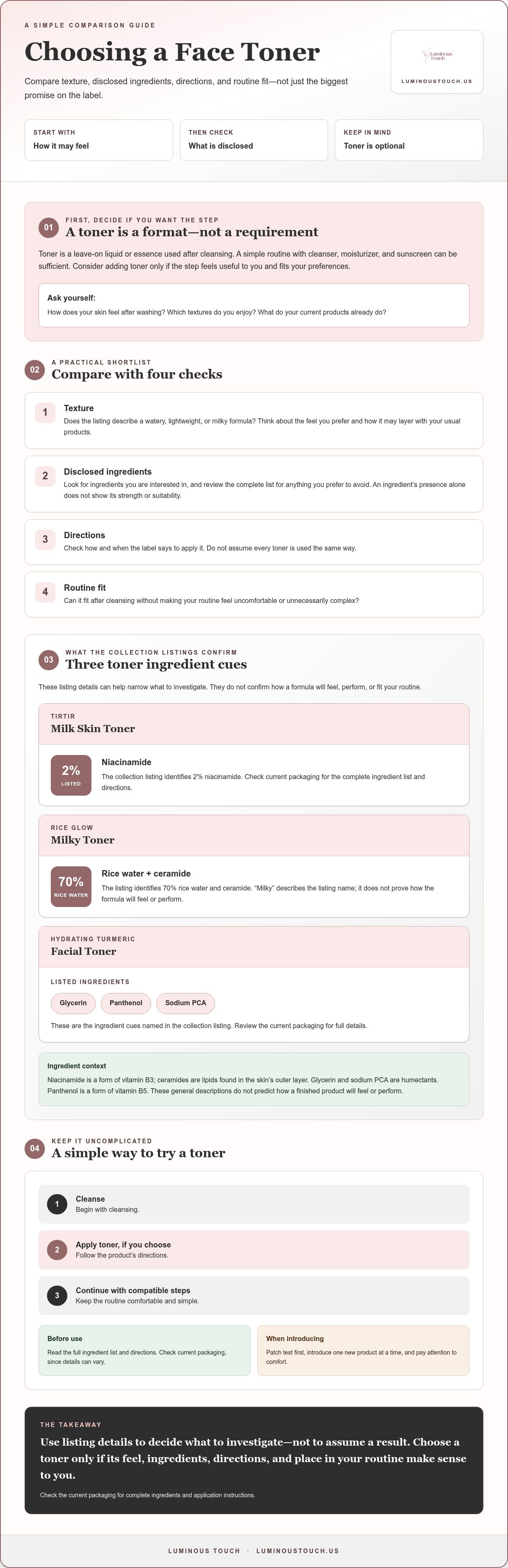
Compare formula details instead of relying on broad labels such as “hydrating” or “brightening.” Use these four checks to make a practical shortlist:
- Texture: Does the listing describe a watery, lightweight, or milky formula? Consider which feel you prefer and how it may layer with your usual products.
- Disclosed ingredients: Are the ingredients you’re interested in listed? Check the complete ingredient list for anything you know you prefer to avoid.
- Directions: Does the label specify how to apply the toner and when to use it? Follow those instructions rather than assuming every toner is used the same way.
- Routine fit: Can you place it between cleansing and your next step without making your routine feel uncomfortable or unnecessarily complex?
Ingredient lists and directions offer more useful clues than broad benefit labels, but neither guarantees a particular result. An ingredient’s presence alone doesn’t reveal its concentration, how the complete formula performs, or whether it will suit you.
Milky toners versus lighter-feeling formulas
“Milky” describes appearance or texture; it doesn’t prove that a formula provides more hydration. Think about how it may layer with your usual moisturizer and whether you prefer a lighter feel. If your moisturizer already feels rich, you may prefer a toner that feels lighter, but personal comfort is the deciding factor. If possible, check the product description and directions for details rather than judging by the name alone.
Which toner ingredients should you look for?
Ingredient names can help you narrow a shortlist. Niacinamide is a form of vitamin B3, and ceramides are lipids found in the skin’s outer layer. Glycerin and sodium PCA are humectants, ingredients used to attract or hold water. Panthenol is a form of vitamin B5 often used in skincare formulas. These general descriptions don’t tell you how a finished product will feel or perform.
Collection listings identify 2% niacinamide in TIRTIR Milk Skin Toner, rice water and ceramide in Rice Glow Milky Toner, and glycerin, panthenol, and sodium PCA in Hydrating Turmeric Facial Toner. Use those details to decide what to look into, then check each product’s complete, current ingredient list for sensitivities and read its directions. If you have persistent concerns, consider asking a qualified healthcare professional. You can compare the toner options using these criteria.
Three Toners Compared: What the Collection Listings Confirm
The three listings highlight different ingredient cues, but they can’t confirm how a formula will feel on your skin or fit your routine. Use the comparison to decide what to investigate. Before choosing, check the current packaging for complete ingredients, directions, and variant details.
| Product | Listing confirms | What to verify |
|---|---|---|
| TIRTIR Milk Skin Toner (150mL) | 2% niacinamide | Other formula details, directions, and current packaging |
| Rice Glow Milky Toner | 70% rice water and ceramide | Selected variant, complete ingredients, and directions |
| Hydrating Turmeric Facial Toner | Glycerin, panthenol, and sodium PCA | Complete ingredient list and application directions |
Which listed toner might match your preferences?
Treat each listing as an option to investigate, not a guaranteed match for a skin type. If you’re interested in niacinamide, review the TIRTIR listing and check its other formula details. If you prefer a milky texture, compare the Rice Glow packaging and directions. For the turmeric toner, use its listed ingredients as a starting point and review the full formula. In each case, weigh texture, routine compatibility, and any personal sensitivities.
How to compare turmeric toner claims carefully
The Hydrating Turmeric Facial Toner listing confirms glycerin, panthenol, and sodium PCA, but those details don’t prove a specific result. Separate ingredient information from benefit language, and review the complete current label before deciding. For more context on the ingredient, read about turmeric skincare benefits.
Ready to compare the listed formulas and their details? Explore the toner options.
How to Add Toner to Your Routine Without Overcomplicating It
Keep the order simple and let the toner’s directions guide how you apply it. A cleanser such as Round Lab Dokdo Cleansing Gel can be an example of the first step. You can also keep using the cleanser that already fits your routine.
- 1. Cleanse: Wash your face with your usual cleanser and follow its directions.
- 2. Apply toner: Use the amount and method stated on the toner packaging.
- 3. Continue your routine: Follow with compatible products you already use, such as moisturizer. In the daytime, sunscreen can follow according to its directions.
If you’re new to toner, add just that one product and notice how your skin feels before changing anything else. Avoid introducing several new active formulas at the same time. Keeping other steps familiar makes it easier to tell whether the new addition feels comfortable in your routine.
Common toner-shopping and routine mistakes to avoid
Avoid choosing a toner only because an ingredient is trending, a broad skin-type label seems to describe you, or a listing makes an appealing claim. Check the current full ingredient list and packaging directions. More layers or more frequent application don’t automatically make a routine better. Use the toner as directed, and don’t add extra steps without a reason.
What should you use after toner?
After toner, continue with compatible routine steps, such as moisturizer. In the morning, sunscreen can be the final skincare step, following its label directions. For example, you can review the Round Lab Birch Juice sunscreen as one option. Keep the rest of your routine familiar while you assess whether the new step feels right.
Use texture, listed ingredients, and directions to decide whether toner belongs in your routine. Browse the Luminous Touch toner collection to review the available options.
Choose a Toner That Fits Your Everyday Routine
A useful toner choice depends on how a formula feels, what its ingredient list discloses, and whether its directions fit the products you already use. Toners are optional, so you don’t need to add one unless the step feels worthwhile. A broad benefit label or skin-type category can’t tell you everything about how a formula may suit your preferences.
Luminous Touch lists three options to compare: TIRTIR Milk Skin Toner with 2% niacinamide, Rice Glow Milky Toner with 70% rice water and ceramide, and Hydrating Turmeric Facial Toner with glycerin, panthenol, and sodium PCA. Treat those listing details as a starting point, not a promise of a particular result. Check the current full ingredient list and directions, and introduce one new product at a time.
Compare the texture and formula details, then decide whether toner adds something you want without making your routine harder to maintain. Explore the toner collection and compare your options at your own pace.
Frequently Asked Questions
What does a face toner do?
A face toner is a leave-on skincare step used after cleansing. Its texture and ingredients depend on the formula. Some people choose toners because they enjoy the feel or want particular listed ingredients in their routine, but toner isn’t essential for everyone. Check the product’s full ingredient list and directions, and treat broad marketing language as a description, not a guarantee of results.
Should I use toner every day?
Use toner as often as the specific product’s directions recommend rather than assuming every formula is designed for daily use. If you’re new to a toner, introduce it carefully and notice how your skin feels. Add only one new product at a time. Changing several steps together can make it harder to tell which product may or may not feel compatible with your routine.
Which toner is best for dry or sensitive skin?
There’s no single toner that’s best for everyone with dry or sensitive skin. Compare the full ingredient list, texture, and directions, and consider your past sensitivities. Patch testing can help you assess your personal tolerance, but it can’t guarantee a reaction-free experience. Stop using the product if irritation occurs, and seek advice from a qualified professional about persistent concerns.
Can I use toner with moisturizer and sunscreen?
Many routines place toner after cleansing and before moisturizer, with sunscreen as the final daytime skincare step. Follow each product’s directions and consider how the layers feel together. Introduce new products one at a time, especially if your routine already includes active ingredients. Toner doesn’t replace moisturizer or sun protection, so keep those steps if they’re part of your routine.
What is the difference between a milky toner and a regular toner?
“Milky” generally describes a toner’s appearance or texture, while toners can vary widely in consistency and ingredients. The label alone doesn’t show that a formula is more effective or better suited to a particular skin type. Compare the complete ingredient list and directions, then consider how the texture feels with your usual moisturizer and other routine steps.