


The most sophisticated path to professional radiance doesn't require a clinical appointment; it begins with a precisely curated ritual on your own vanity. You've likely felt the frustration of persistent dullness that physical scrubs simply cannot reach, yet the fear of irritation or the complexity of acid types often stalls your progress. It is natural to feel hesitant about the safety of an at home chemical peel, especially given the historical risks associated with high-potency formulas that lack professional supervision.
We're here to show you that clinical-grade resurfacing is now achievable through gentle, smart exfoliation protocols that honor your skin's delicate balance. You'll learn how to harness 2026’s premier K-beauty innovations, including the rice peeling revolution and multi-acid blends, to achieve a luminous glass-skin glow without the downtime. This guide explores the transition from harsh stripping to intelligent renewal, providing a methodical approach to reducing hyperpigmentation and smoothing texture. By the end, you'll have the confidence to select high-performance solutions that deliver visible, vibrant results with total peace of mind.
Key Takeaways
- Understand the biological mechanism of cell turnover to replace abrasive physical scrubs with sophisticated resurfacing for a smoother, refined texture.
- Decode the acid spectrum to identify whether AHAs, BHAs, or innovative K-beauty rice ferments best address your specific concerns of dullness or congestion.
- Learn how to select the most effective at home chemical peel by balancing clinical potency with barrier-supporting ingredients for professional results without irritation.
- Master the professional application protocol, from the essential double-cleanse to precise distribution techniques, ensuring a uniform and radiant transformation.
- Capitalize on the post-peel "Window of Absorption" by integrating skin-sculpting technology to accelerate collagen synthesis and deeply soothe the complexion.
What is an At Home Chemical Peel and How Does It Work?
True skin transformation begins beneath the surface. An at home chemical peel is a sophisticated, controlled method of skin resurfacing that utilizes specific acids to dissolve the cellular "glue" holding dead skin cells together. While physical scrubs rely on abrasive friction to manually strip the surface, chemical resurfacers work with your skin's natural biology. This process accelerates the rate of cell turnover, the vital cycle where your body sheds old, damaged cells to reveal the fresh, luminous layers underneath. Understanding what is a Chemical Peel helps you appreciate how these formulas provide a more uniform and deep exfoliation than any manual scrub could achieve.
By 2026, the landscape of home skincare has evolved significantly. Modern formulations are engineered for stability and predictability, moving away from the volatile, high-concentration acids that once caused concern. These smart delivery systems ensure that the active ingredients penetrate the stratum corneum evenly. This precision provides clinical-grade results while maintaining the integrity of your skin's natural barrier, making the experience both effective and serene.
The Benefits of Regular Home Resurfacing
Consistency in resurfacing creates an immediate improvement in light reflectivity, often referred to as the "glow" factor. When the skin surface is smooth and free of debris, light bounces off evenly rather than being trapped by rough patches. Over time, these treatments stimulate collagen production, which helps reduce the depth of fine lines and maintains skin elasticity. It's an essential step for maximizing your routine; a clear surface allows subsequent serums and moisturizers to absorb more deeply, ensuring every drop of your skincare works harder for you.
Safety First: Who Should (and Shouldnt) Peel?
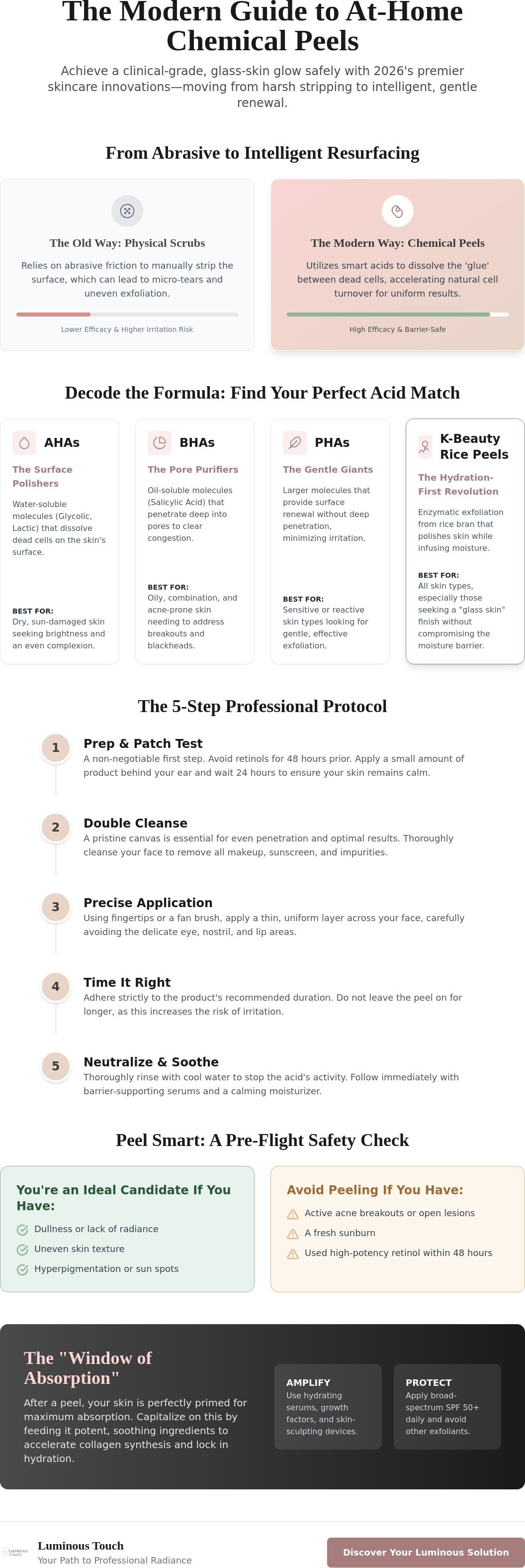
Most skin types thrive with an at home chemical peel, but certain conditions require a more cautious approach. You're an ideal candidate if you want to address hyperpigmentation, uneven texture, or dullness. However, you should avoid peeling if you have active acne, a fresh sunburn, or have used high-potency retinol within the last 48 hours. A patch test is a non-negotiable first step for home safety. Apply a small amount of the formula to your inner arm or behind the ear and wait 24 hours to ensure your skin remains calm and comfortable before proceeding with a full application.
Decoding the Formula: AHAs, BHAs, and the Rice Peeling Revolution
Selecting the right at home chemical peel requires a nuanced understanding of how different molecular weights interact with your skin. Alpha Hydroxy Acids (AHAs), including glycolic and lactic acids, function as high-performance surface polishers. These water-soluble molecules are exceptional for dry or sun-damaged skin because they dissolve the bonds of dead cells to reveal a brighter, more even complexion. In contrast, Beta Hydroxy Acids (BHAs), such as salicylic acid, are oil-soluble. This unique property allows them to penetrate deep into the pores to clear congestion, making them the primary choice for oily and acne-prone skin profiles. For those with delicate or sensitive skin, Polyhydroxy Acids (PHAs) have emerged as the "gentle giants" of exfoliation, providing surface renewal without the risk of deep-tissue irritation.
Modern skincare science has moved beyond the "more is better" philosophy regarding acid concentrations. It is vital to prioritize safety and follow FDA safety warnings by avoiding unregulated, professional-strength acids that can cause permanent damage. Instead, the focus has shifted toward stabilized K-beauty innovations that combine traditional acids with soothing ferments to ensure a predictable and serene transformation.
The Power of Rice Peeling Ampoules
Rice-based ferments are redefining the peeling category by offering a hydration-first approach to resurfacing. Using rice bran water and natural enzymes, these formulas provide enzymatic exfoliation that is far gentler than traditional chemical stripping. The Dr. Melaxin Radiance Boost Rice Peeling Ampoule is a standout innovation, delivering a glass-skin finish by polishing the skin while simultaneously infusing it with moisture. This method is often more comfortable than a standard at home chemical peel, as it supports the moisture barrier instead of challenging it, resulting in a luminous, healthy glow.
Targeting Body Texture: The Medicube Approach
Body skin is significantly thicker and more resilient than the skin on your face, which means it often requires specialized acid concentrations to see visible results. The Medicube Hydrating Facial & Body Peel Shot Duo provides a comprehensive solution for head-to-toe smoothness by addressing these varying needs. Chemical resurfacing is especially essential for treating keratosis pilaris, as it effectively dissolves the stubborn keratin plugs that create a rough, bumpy texture on the arms and legs. You can discover these advanced formulas within our curated collection of skincare innovations, each selected for its clinical efficacy and elegant application.
Smart Resurfacing: Choosing the Best Peel for Your Skin Goal
Selecting the ideal at home chemical peel requires a strategic alignment between your skin's current health and your ultimate aesthetic goals. True transformation requires a plan. While the desire for rapid results is common, success hinges on balancing acid potency with the integrity of your skin barrier. Over-exfoliation can lead to inflammation and sensitivity, which often stalls the very progress you seek to achieve. Following expert advice from Harvard Medical School, you should begin with lower concentrations to assess tolerance before graduating to more intensive resurfacing agents. Transitioning from beginner-strength formulas to professional-grade home options should be a gradual process, allowing your skin to adapt to higher acid percentages without compromising its protective shield.
Peels for Hyperpigmentation and Dark Spots
For those battling stubborn discoloration, the synergy between chemical exfoliants and botanical brighteners is unmatched. Combining traditional acids with agents like Kojic acid helps inhibit melanin production at the source, effectively fading sun spots and post-inflammatory marks. Integrating a Turmeric facial trio set into your post-peel routine further enhances this brightening effect. Turmeric is celebrated for its antioxidant properties, which calm the skin while promoting a more uniform, luminous tone. It's a combination that provides a comprehensive solution for those seeking to restore clarity and radiance to their complexion.
Anti-Aging and Texture Refinement
Addressing the visible signs of aging requires acids that do more than just polish the surface. High-performance multi-acid blends within an at home chemical peel work to stimulate collagen synthesis, which naturally plumps the skin and softens the appearance of fine lines. If you're looking to smooth out irregularities, a dedicated Skin Texture Refinement Treatment can provide the deep resurfacing necessary to minimize pore visibility and refine the skin's grain. This dual-action approach ensures that while dead cells are removed, the structural foundations of the skin are reinforced for long-term vitality, leaving you with a refined and youthful glow.
The Professional Protocol: How to Perform a Safe Peel at Home
Timing is the most critical variable in your resurfacing protocol. In the world of high-performance skincare, more is not better. Exceeding the recommended contact time can lead to unnecessary irritation or barrier damage, so you must use a timer for every session. You should also prioritize the removal and neutralization phase to ensure all active ingredients are deactivated. This transition from active treatment to skin recovery is what defines a successful home ritual. To ensure you have the right tools for a flawless application, explore our curated selection of clinical-grade resurfacing tools.
Step-by-Step Home Peel Checklist
- Cleanse: Use a gentle, pH-balanced wash to prepare the skin. Avoid using any cleansers with active acids or physical exfoliants immediately before your peel.
- Apply: Use a fan brush or clean fingertips to distribute a formula like the Dr. Melaxin Radiance Boost Rice Peeling Ampoule evenly across the face, avoiding the delicate eye area and lips.
- Monitor: Watch for "frosting"—small white patches on the skin—or intense, localized redness. These are signs that the acid has penetrated deeply and you should remove the product immediately.
- Rinse: Use cool water to thoroughly rinse the skin. The cool temperature helps soothe the skin barrier and ensures all traces of the acid are gone.
Common Mistakes to Avoid
One of the most frequent errors is mixing a peel with other high-potency actives like Retinol or Vitamin C in the same session. This can overwhelm the skin and cause significant sensitivity. Many users also neglect the neck and décolletage, though these areas require a lower concentration of acids due to thinner skin. Finally, never skip sunscreen the morning after your treatment. Peeled skin is highly photosensitive, and failing to protect it can lead to the very hyperpigmentation you're trying to resolve.
Elevating Your Results: Post-Peel Recovery and Device Integration
The true secret to achieving clinical-grade results lies not just in the exfoliation itself, but in the meticulous care provided during the "Window of Absorption." This 30-minute period immediately following an at home chemical peel is when your skin is most receptive to active ingredients. Because the stratum corneum has been refined, topicals can penetrate deeper into the dermis, making this the most effective time to introduce high-performance nutrients. To maximize this opportunity, the "Seal and Protect" phase is vital. You must focus on preventing trans-epidermal water loss (TEWL) to ensure your new skin cells remain plump, hydrated, and resilient.
Modern technology allows you to bridge the gap between topical application and deep cellular rejuvenation. Integrating the 5-in-1 Face Sculpting & Skin Care Device during your post-peel ritual helps calm the skin through gentle microcurrents while boosting collagen production. For those looking to accelerate the healing of minor micro-trauma, using an LED Light Therapy Face Mask for At-Home Glow Routine is a sophisticated choice. The red light setting specifically targets inflammation and encourages rapid tissue repair, ensuring your complexion returns to a state of serene, luminous health faster than with topical care alone.
The Recovery Kit: Masks and Balms
- Hydration Flood: Applying a Deep collagen hydrating Mask immediately after rinsing your peel provides an essential surge of moisture to newly exposed cells.
- Targeted Repair: Use the Kahi Wrinkle Bounce Multi Balm on sensitive areas or around the nasolabial folds to reinforce the moisture barrier and prevent dryness.
- Eye Rejuvenation: Peptides are the perfect post-peel partner. The Revitalizing Multi Peptide Eye Cream helps firm and brighten the delicate eye area when its absorption potential is at its peak.
Maintaining the Glow Between Peels
Consistency is the foundation of a professional-grade complexion. While the immediate results of an at home chemical peel are striking, maintaining that luminosity requires a thoughtful interim routine. You can sustain a vibrant, sunless glow without UV damage by incorporating SunKissed Serum Drops into your daily moisturizer. For expert tips on achieving a seamless finish, consult The Ultimate Guide to Tanning Drops. To avoid over-stressing your skin, schedule your next resurfacing session within the 2-to-4 week sweet spot, allowing your barrier sufficient time to fully recover and strengthen.
Step Into Your Most Luminous Future
Transitioning to a sophisticated at home chemical peel routine is a powerful commitment to your skin's long-term health and vitality. By selecting the precise acid profile for your unique concerns and adhering to a methodical, safety-first protocol, you've moved beyond surface-level care into true skin transformation. You now possess the knowledge to stabilize your moisture barrier while achieving that coveted glass-skin clarity through intelligent resurfacing and post-peel device integration.
Your journey to professional-grade radiance is supported by our curated selection of Dr. Melaxin and Medicube clinical formulas, each chosen for its precision and efficacy. We've paired these high-performance treatments with professional-grade 5-in-1 device integration to ensure every active ingredient works at its peak. You can begin your transformation today and enjoy free US shipping on our premium skincare sets. It's time to refine your ritual and reveal the vibrant, healthy complexion you deserve.
Experience the K-Beauty Glow with the Dr. Melaxin Rice Peeling Ampoule
Embrace this new era of smart exfoliation and watch your skin respond with a renewed, vibrant energy that perfectly reflects your inner confidence.
Frequently Asked Questions
How often should I do an at home chemical peel?
Perform an at home chemical peel every two to four weeks to maintain optimal cell turnover without compromising your skin's protective barrier. This frequency provides your skin with the necessary time to undergo its natural recovery process and reinforce its structural integrity. If you're using a gentler enzymatic formula like the Dr. Melaxin Radiance Boost Rice Peeling Ampoule, your skin might tolerate more frequent sessions, but you should always prioritize barrier health over aggressive exfoliation.
Will my skin actually peel after an at-home treatment?
Visible shedding or "peeling" is not a required indicator of a successful treatment, as many modern formulas work through microscopic exfoliation. High-performance solutions are designed to dissolve the cellular bonds of dead skin without causing the dramatic, visible flaking often associated with deep clinical procedures. You'll likely notice a smoother texture and enhanced luminosity rather than physical peeling, which signifies that the formula is refining your skin surface gently and effectively.
Can I use a chemical peel if I have sensitive skin?
You can safely use a chemical peel even with sensitive skin by selecting formulas that utilize large-molecule acids like PHAs or soothing rice-based ferments. These ingredients provide surface-level renewal without penetrating as deeply as glycolic acid, which minimizes the potential for irritation. It's essential to perform a patch test behind the ear 24 hours before your full application to ensure your skin remains calm and comfortable throughout the process.
What should I put on my skin after a chemical peel?
Apply deeply hydrating and barrier-repairing products, such as a Deep collagen hydrating Mask, immediately after rinsing your peel to flood the newly exposed cells with moisture. This essential step takes advantage of the skin's peak absorption potential following resurfacing. Following this with a targeted treatment like the Kahi Wrinkle Bounce Multi Balm helps to seal in that hydration and prevent trans-epidermal water loss, ensuring your recovery is both serene and highly effective.
Is an at-home peel as effective as a professional one?
Can I use a face sculpting device on the same day as a peel?
You can use a face sculpting device on the same day as your peel, provided you utilize the calming red light or microcurrent settings to support skin recovery. These technologies work synergistically with the peel by accelerating the healing of micro-trauma and encouraging collagen synthesis during the vital post-peel window. Avoid any aggressive massage or high-intensity settings immediately after resurfacing to ensure your skin remains comfortable and free from excessive physical stress during its most sensitive phase.
What ingredients should I avoid before doing a peel?
Avoid using retinoids, high-potency Vitamin C, or abrasive physical scrubs for at least 48 hours prior to your treatment to prevent over-sensitizing the skin. These active ingredients can increase the risk of an adverse reaction when combined with the acids in a chemical resurfacer. Ensuring your skin is in a calm, neutral state before you begin allows the peel to work more predictably and safely, providing a more elegant and effective transformation without unnecessary irritation.
How long does it take to see results from an at-home peel?
Noticeable improvements in skin luminosity and "glow" often appear after just one application of a high-performance formula. For more structural changes, such as refined texture or reduced hyperpigmentation, you should expect to see visible results after four to six weeks of consistent use. This duration allows your skin to complete its natural renewal process, ensuring that the fresh, healthy cells reach the surface to reveal a more uniform and radiant complexion.


