A thoughtful skin texture refinement treatment starts by identifying what you want to address. Rough patches, visible pores, post-blemish marks, and fine lines can look alike at a glance, but they may call for different approaches. Layering exfoliants, retinoids, or at-home devices in pursuit of quick results can leave skin feeling uncomfortable rather than smoother-looking.
If you’re unsure which concern to address first, start with the basics and pay attention to how your skin feels. A measured routine, introduced gradually, is a more considered starting point than aggressive exfoliation.
This guide covers common texture concerns, practical routine steps, and ways to approach active products without overlooking skin comfort. It also explains when persistent or concerning changes may warrant assessment by a qualified professional, so you can make more informed choices.
Key Takeaways
- A skin texture refinement treatment should match the concern. Roughness, dryness, visible pores, post-blemish marks, and fine lines may call for different approaches.
- More exfoliation isn’t automatically better. Pay attention to comfort and avoid adding strong actives or devices too quickly.
- Build a considered routine with gentle cleansing, moisturizer, daytime sun protection, and one texture-focused active at a time. Follow the product’s label directions.
- Seek professional advice for skin changes that persist, worsen, become painful, or appear suddenly. An at-home cosmetic routine isn’t a clinical assessment.
What Does a Skin Texture Refinement Treatment Actually Address?
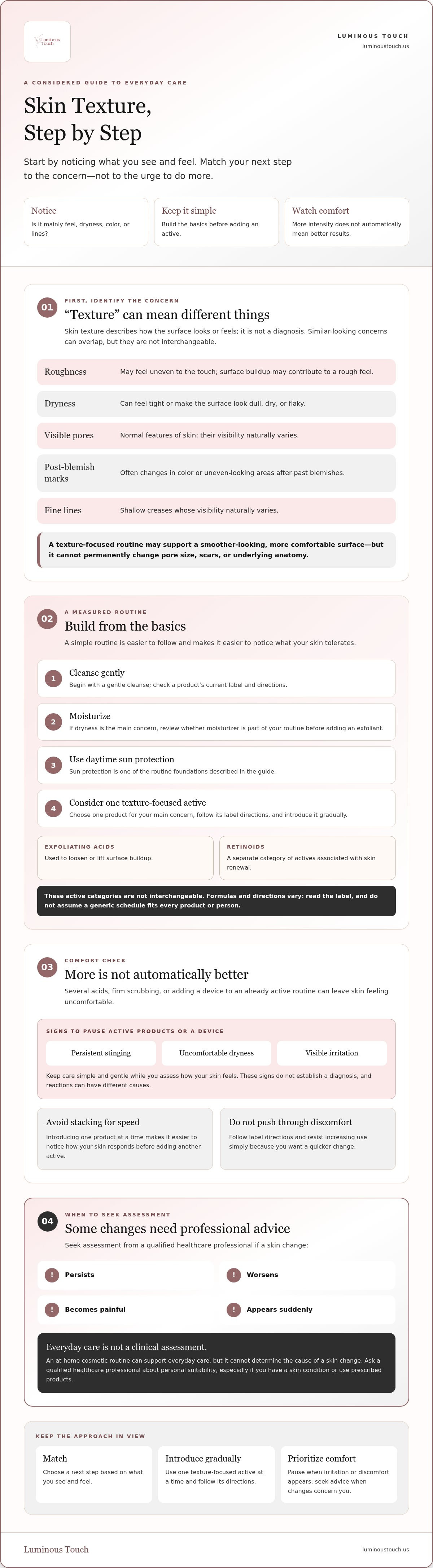
Skin texture describes how the skin’s surface looks or feels; it isn’t a diagnosis. A skin texture refinement treatment may mean an at-home skincare routine or a professional option, depending on the concern. Roughness can feel uneven to the touch, while dryness may make the surface look dull or flaky. Visible pores are normal features of skin. Post-blemish marks are often changes in color, while fine lines are shallow creases. These concerns can overlap, but they aren’t interchangeable, so begin by noticing what you see and feel rather than choosing a product based on the word “texture.”
A texture-focused routine can support a smoother-looking, more comfortable surface, but it can’t permanently change pore size, scars, or underlying anatomy. Exfoliation removes surface cells through mechanical or chemical methods. Learn more about exfoliation before deciding whether it belongs in your routine.
Which skin texture concerns can routine skincare address?
Start with the foundations: cleanse gently, moisturize, and use daytime sun protection. These steps make a routine easier to follow and can support skin comfort and appearance. Then match any next step to your main concern. If the surface feels rough, you might consider a texture-focused product; if dryness is the main issue, review whether your routine includes moisturizer before adding an exfoliant. If you add an active, choose one product and follow its label directions rather than assuming more frequent use means better results. Check ingredients and instructions carefully, especially if your skin is easily unsettled.
Why does skin sometimes look rough or uneven?
Dryness can make skin feel tight or appear flaky, and surface buildup may contribute to a rough feel. Past blemishes can leave marks or uneven-looking areas, while pores and fine lines naturally vary in visibility. Similar-looking concerns may have different contributors, so avoid trying to diagnose them from appearance alone. A useful first check is whether the concern is mainly about feel, visible dryness, color, or lines. That observation can help you choose a sensible next step without adding several products at once.
If a concern persists, worsens, becomes painful, or changes suddenly, seek assessment from a qualified healthcare professional. An at-home cosmetic routine can support everyday care, but it can’t determine the cause of a skin change.
Do Stronger Exfoliants Refine Texture Faster, or Increase Irritation?
More intensity doesn’t automatically mean better results. Using several acids, scrubbing firmly, or adding a device to an already active routine can leave skin feeling uncomfortable. A skin texture refinement treatment should be guided by the concern and your skin’s response, not by how much you can layer at once.
Introducing one product at a time makes it easier to notice how your skin responds before you add another active. Follow the product’s label directions and resist increasing use just because you want a quicker change. The American Academy of Dermatology offers guidance on how to safely exfoliate, including choosing a method that suits your skin.
How do exfoliating acids and retinoids differ?
Exfoliating acids are used to loosen or lift surface buildup, while retinoids are a separate category of actives associated with skin renewal. They aren’t interchangeable, and one isn’t automatically right for every concern. Formulas and directions vary, so read the label and avoid combining or changing products based on a generic schedule. Ask a qualified healthcare professional for advice about personal suitability, especially if you have a skin condition or use prescribed products.
What signs suggest a routine may be too much?
Persistent stinging, uncomfortable dryness, or visible irritation are cues to pause active products or a device rather than push through. Keep care simple and gentle while you assess how your skin feels. These signs don’t establish a diagnosis, and reactions can have different causes.
If symptoms persist or concern you, seek guidance from a qualified healthcare professional. For an at-home routine, you can also browse skincare essentials and check each product’s current ingredients and directions before use.
How to Build a Skin Texture Refinement Routine Step by Step
A measured routine is easier to follow and makes it simpler to notice what your skin tolerates. Begin with a gentle cleanse, then moisturize. In the daytime, finish with sun protection. For example, a gentle facial cleansing gel may be one option to consider. Check its current label and directions when choosing a cleanser for your routine.
Once those basics feel comfortable, consider adding one texture-focused active. A skin texture refinement treatment at home doesn’t need a crowded lineup. Introduce one product at a time, follow the label, and track how your skin feels rather than chasing rapid change. If you’re comparing products, check their intended use and directions instead of choosing by strength or adding several similar products together.
How should you introduce a new active ingredient?
Read the product directions before use, including any guidance about patch testing. Start cautiously according to those instructions, not a universal frequency that may not suit the formula or your skin. Avoid beginning several exfoliants or devices at once. Changing one thing at a time helps you identify what may be affecting comfort and keeps your routine easier to adjust.
Keep a simple note of what you used and any changes in comfort or appearance. For example, record the product, when you used it, and whether your skin felt comfortable afterward. If a product causes persistent discomfort, pause it and consider qualified advice.
Why does daily sun protection belong in the routine?
Sun protection helps protect exposed skin from ultraviolet radiation as part of everyday care. It supports a thoughtful routine, but it shouldn’t be treated as a way to reverse existing texture changes. Choose a sunscreen that suits your needs and follow its label directions. A broad-spectrum daily sunscreen is one catalog option; verify the current product label for its claims and instructions.
Build steadily, keeping the routine comfortable and uncomplicated. Explore skincare essentials to consider options for a considered at-home routine.
At-Home Products vs. Professional Advice for Texture
At-home skincare and professional assessment serve different purposes. A simple cosmetic routine can support everyday cleansing, moisturizing, and sun protection. A dermatologist can assess skin changes, discuss possible causes, and advise on care suited to your concerns. Neither route guarantees a particular texture result. Think of a skin texture refinement treatment as a routine choice when the goal is cosmetic and your skin feels comfortable, not as a substitute for evaluation.
When may an at-home routine be a reasonable starting point?
If you’re addressing a general cosmetic concern and your skin feels comfortable, a basic routine may be a reasonable place to begin. Keep it simple and introduce products thoughtfully. Optional components might include a facial cleanser, sunscreen, or skincare serum, but check current labels, ingredients, and directions before use. Luminous Touch offers options such as Dr. Melaxin Collagen Boosting Serum and Dr. Melaxin Radiance Boost Rice Peeling Ampoule. Review each product’s current label and directions to decide whether it fits your routine. These cosmetic products don’t diagnose or treat medical skin conditions.
If new products bring ongoing discomfort, pause the new additions and simplify your routine rather than layering on more products. Consider qualified advice if the discomfort continues or you’re unsure what to use.
When should you speak with a dermatologist?
Seek assessment from a qualified healthcare professional, such as a dermatologist, if a concern persists, worsens, becomes painful, or changes suddenly. Scarring concerns or changes that you can’t confidently identify also deserve professional attention. An assessment can help distinguish a cosmetic concern from one that may need medical care.
Luminous Touch is an online beauty retailer, not a clinic, and can’t provide individualized medical diagnosis or treatment. Its skincare range may offer products to consider for a personal routine, but product choice isn’t a clinical recommendation. Explore the range at your own pace, and let comfort, clear product directions, and professional guidance when needed shape your next step.
Make Your Next Skincare Step a Thoughtful One
Skin texture can reflect different concerns, so a considered skin texture refinement treatment begins with noticing what you want to address, not reaching for the strongest active. Keep the routine simple, introduce products gradually, and pay attention to comfort. At-home cosmetic care can support everyday skincare, while persistent, painful, worsening, or sudden changes are reasons to seek qualified professional advice.
Consistency matters more than an overloaded routine. Choose products for their intended role, read current labels and directions, and give yourself room to adjust thoughtfully. Luminous Touch offers a curated selection of skincare from Korean beauty brands, including cleansers, sunscreen, serums, and at-home beauty tools. These are optional routine components, not a substitute for medical assessment or treatment.
Explore the Luminous Touch skincare collection to discover options for a considered at-home routine. Small, informed choices can help make skincare feel more comfortable and intentional.
Frequently Asked Questions
What is the best treatment for uneven skin texture?
The best approach depends on what’s causing the uneven appearance and what you want to address. Dryness, rough-feeling skin, visible pores, post-blemish marks, and fine lines may call for different care. For general cosmetic concerns, a simple routine with gentle cleansing, moisturizer, and daytime sun protection can be a starting point. A dermatologist can assess persistent or changing concerns and discuss suitable options.
Can exfoliation improve skin texture?
Exfoliation may help reduce surface buildup and support a smoother-looking feel, but stronger or more frequent exfoliation isn’t necessarily better. Scrubs and exfoliating products can feel harsh if overused. Choose a method that suits your skin, follow the product directions, and introduce it cautiously. Pause if you experience persistent stinging, uncomfortable dryness, or visible irritation, and seek qualified advice if symptoms continue.
How long does it take to see smoother-looking skin?
There’s no single timeline for seeing a change, because results depend on the concern, the product, and how comfortably your skin tolerates it. Follow label directions and give a routine time rather than increasing use or adding multiple actives in pursuit of quick results. Track comfort as well as appearance. If the concern persists or worsens, consider professional evaluation instead of simply intensifying your routine.
Can I use retinol and an exfoliating acid together?
Using retinol and an exfoliating acid together may be too irritating for some people, so don’t assume they should be layered. Their roles and product instructions differ, and suitability depends on your skin and the specific formulas. Check labels, avoid starting both at once, and ask a qualified healthcare professional for personalized guidance, particularly if you have a skin condition or use prescribed skincare.
When should I see a dermatologist about skin texture?
See a dermatologist or another qualified healthcare professional if a skin concern persists, worsens, becomes painful, changes suddenly, or involves scarring that concerns you. An assessment can help determine whether the issue is a cosmetic concern or needs medical attention. An at-home skin texture refinement treatment is not a diagnosis, and an online beauty retailer can’t provide individualized medical evaluation or treatment.