
The most impressive-sounding PDRN eye patch may not be the right fit for your under-eye routine. The ingredient list, patch shape, material, and wear directions all affect what you’re buying and how it may feel to use. A polished claim alone can’t tell you what a product is likely to do. PDRN appears in topical skincare, but its presence on a label doesn’t guarantee a particular result.
This guide explains what PDRN means in skincare and how to compare eye patches using practical, ingredient-focused criteria. You’ll learn what to check on the label, how shape and material can affect comfort, and why directions and supporting formula details matter. You’ll also learn how to weigh product claims realistically, especially when evidence for topical formulas is still developing.
Use the checklist to decide whether a patch suits your preferences and routine, then check its current label and directions before buying. The listed Centellian 24 360º Shot PDRN Glowing Eye Patch is one option to assess using the same criteria.
Key Takeaways
- Look beyond “PDRN” on the front label. Check the full ingredient list and how the manufacturer describes the ingredient.
- Compare directions, shape, material, and fit to find a patch that feels comfortable and works with your routine.
- Keep expectations measured. A topical patch is a cosmetic skincare step, and results reported for one formula don’t guarantee the same effects from another.
- Before choosing the listed Centellian 24 eye patch, review its current label and directions, then consider your skincare goals and sensitivities.
What Is a PDRN Eye Patch, and What Can It Realistically Do?
A PDRN eye patch is a topical skincare product designed to sit beneath the eyes and marketed with a PDRN-related ingredient. Check the full ingredient list to confirm what the formula contains. It’s a cosmetic skincare step, not an injectable treatment or medical procedure.
Keep expectations grounded. Depending on the formula, a patch may feel cooling or leave the skin feeling temporarily hydrated. That surface-level experience is different from lasting structural change or a clinically proven result. Evidence about an ingredient in one preparation or delivery method doesn’t automatically establish what a topical patch can do.
What does PDRN mean in skincare?
PDRN stands for polydeoxyribonucleotide, a term for DNA-derived fragments. For a plain-language overview of the ingredient’s background and proposed biological activity, see Polydeoxyribonucleotide (PDRN). PDRN is often associated with fish-derived sources, but ingredients and sourcing can vary. Check the manufacturer’s description and the product label for specifics.
A PDRN-related term on the front of a package doesn’t confirm the exact ingredient or its source. The Centellian 24 360º Shot PDRN Glowing Eye Patch is a listed product, but verify its current ingredient wording and source on the label. General information about PDRN isn’t confirmation of this product’s formula.
Why do brands use the eye patch format?
Patches offer a localized, ready-to-use way to apply skincare beneath the eyes. Their shape can make placement feel precise, and the format may fit easily into a short routine. The format alone doesn’t prove that ingredients penetrate to a particular depth or produce a particular effect.
Comfort depends on the individual product, including its material, fit, serum, adherence, and directions. Follow the stated wear time rather than assuming that leaving patches on longer will improve results. If the skin feels irritated or uncomfortable, remove the patches and discontinue use.
PDRN Eye Patch Benefits: Separate Plausible Skincare Support from Hype
Look beyond a headline claim when assessing a product. Research on PDRN in an injectable or another formulation doesn’t establish that a topical patch will have the same effects. The formula, delivery method, and evidence all matter.
A cosmetic claim describes an intended appearance benefit; a demonstrated clinical outcome requires evidence from the specific product or a closely matched formula. If a brand promises firming, brightening, or wrinkle reduction, look for details about how the product was tested, who participated, how long the test lasted, and what outcome was measured. Without that context, it’s difficult to judge what the claim means.
Topical patches versus injectable PDRN treatments
Injectable treatments place ingredients into the skin using a procedure; a skincare patch is applied to the skin’s surface. Because these are different delivery methods, results or mechanisms discussed for procedures shouldn’t be transferred to at-home patches. Assess a patch using evidence relevant to its topical formula, not the reputation of PDRN in other settings.
What results should shoppers expect?
A patch may leave the under-eye area feeling hydrated or refreshed, and the skin may look temporarily smoother after use. These are possible cosmetic experiences, not guaranteed results. They can depend on the formula, patch fit, directions, and individual skin.
Use the product as directed and assess claims carefully. A PDRN eye patch can’t guarantee correction of dark circles, puffiness, or fine lines. These concerns can have different causes and may not respond to a topical product. If a claim sounds definitive, check whether the evidence measures that exact result in that exact product. General ingredient research and testimonials don’t establish the same thing.
How to Choose a PDRN Eye Patch: A Practical Comparison Checklist
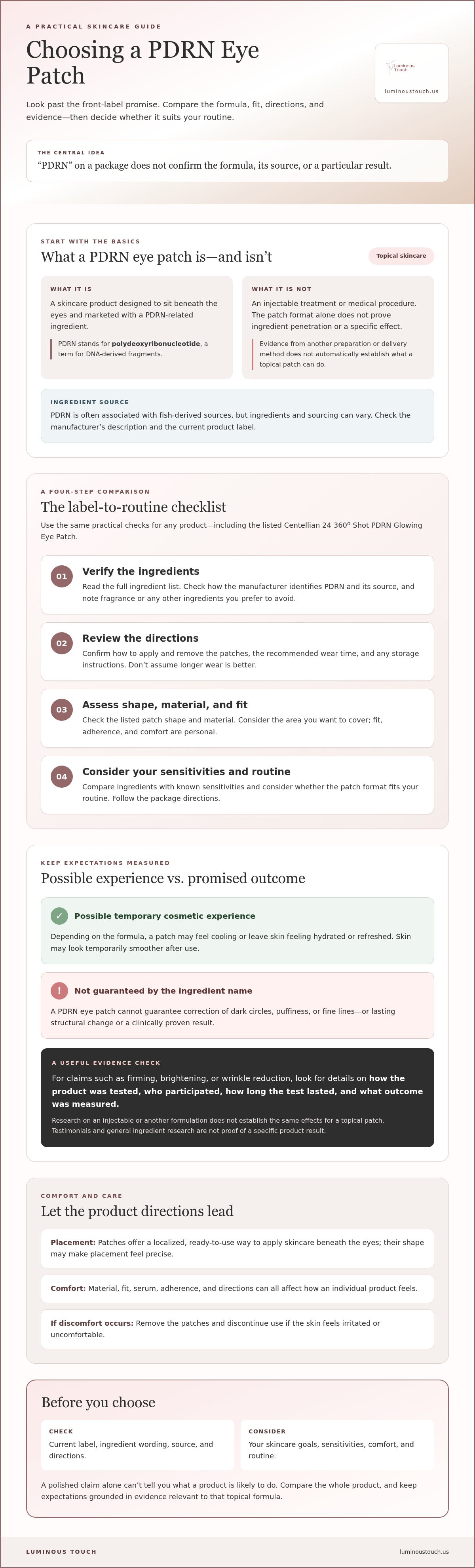
Compare formula transparency, comfort, and routine fit rather than relying on front-label promises. Use this four-step check before choosing:
- Verify ingredients: Read the full ingredient list and check how the manufacturer identifies PDRN and its source. Note fragrance or any other ingredients you prefer to avoid.
- Review directions: Confirm how to apply and remove the patches, the recommended wear time, and any storage instructions. Don’t assume longer wear is better.
- Assess fit: Check the product listing for patch shape and material. Consider whether the stated design seems suited to the area you want to cover. Fit, adherence, and comfort are personal.
- Consider sensitivities: Compare the ingredients with your known sensitivities and follow the package directions carefully.
Which label and product details should you check?
Before buying, review the full ingredient list, directions, package quantity, and the details behind manufacturer claims. For Centellian 24 360º Shot PDRN Glowing Eye Patch -6 Pairs, check the current product listing and packaging for the ingredient name and source, as well as the directions. The product name alone doesn’t confirm the full formula, shape, material, or wear time, so don’t infer those details.
How should sensitive-skin shoppers assess a patch?
Pay special attention to ingredients that have caused you discomfort before, including fragrance if that’s a concern for you. If irritation occurs, remove the patches and stop use. Seek appropriate professional advice if symptoms persist. For a different eye-care format, compare the retinol eye cream product page. It isn’t a PDRN patch, so assess it by its own label and directions.
Shopping for makeup rather than under-eye skincare? Explore eye palette sets as a separate category.
Is a PDRN Eye Patch Right for Your Routine? Choose the Next Step
Choose based on what you want from an under-eye product, what your skin tolerates, and whether you’ll use the format comfortably as directed. A patch may suit you if you prefer a quick, localized skincare step. If you’re sensitive to certain ingredients or unlikely to follow the wear directions, pause and check the label before deciding. Let verified product information guide your choice, and keep expectations realistic.
How does the listed Centellian 24 eye patch fit?
Centellian 24 360º Shot PDRN Glowing Eye Patch -6 Pairs is a listed option to assess, not a promise of a particular result. Before choosing it, review the current product listing and packaging for the full ingredient list, how the manufacturer describes PDRN and its source, and the directions. Check availability as well. Don’t infer formula details or benefits from the product name alone.
For a different skincare format, the MEDICUBE PDRN collagen serum is a serum, not an eye patch. Compare its label and directions separately. Its formula and use aren’t necessarily interchangeable with those of an under-eye patch.
When should shoppers choose eye makeup instead?
Eye palettes and makeup sets are designed to create eye looks. They aren’t skincare patches and don’t replace an under-eye skincare step. Keep the purpose clear as you browse: choose skincare according to your routine and label details, or makeup according to the look and format you want.
If you’re looking for makeup rather than under-eye skincare, browse the eye palettes and sets collection.
Choose Your Next Eye-Care Step with Confidence
A thoughtful choice starts with clear expectations. A PDRN eye patch is a topical skincare format, and claims should be judged by evidence for the specific product, not ingredient buzz alone. Before buying, compare the full ingredient list, directions, patch fit, and any ingredients that may not suit your skin. Comfort and routine fit matter as much as a compelling label.
Luminous Touch lists Centellian 24 360º Shot PDRN Glowing Eye Patch -6 Pairs as an option to assess. Check its current label and directions before deciding whether it matches your preferences. A skincare patch and eye makeup serve different purposes.
If you’re shopping for makeup rather than under-eye skincare, explore the eye palettes and sets collection. For under-eye skincare, review the current Centellian 24 product listing and its label before choosing.
Frequently Asked Questions
What is a PDRN eye patch?
A PDRN eye patch is a topical skincare product shaped for the under-eye area and marketed with a PDRN-related ingredient. Check the complete product label to confirm the ingredient’s exact name and how the manufacturer describes it. A patch isn’t an injectable procedure. Assess claims using information about the specific formula and evidence provided for that product, rather than assuming all PDRN products have the same effects.
Do PDRN eye patches really work?
A PDRN eye patch may provide a convenient skincare step and, depending on its formula and use, a temporarily hydrated or refreshed feel. That experience isn’t guaranteed. Evidence for injectable PDRN doesn’t establish results for a topical patch. Look for a transparent ingredient list and realistic claims. Treat promises of lasting wrinkle reduction or dark-circle correction cautiously unless relevant product-specific evidence supports them.
How often can you use PDRN eye patches?
Use them as often as the specific product’s directions recommend. Patches don’t all share the same schedule or wear time. Read the label, follow its application and removal instructions, and avoid using the product on irritated skin. If discomfort or irritation develops, discontinue use. If symptoms persist or concern you, seek appropriate advice from a qualified professional instead of restarting based on a general schedule.
Can sensitive skin use PDRN eye patches?
Some people with sensitive skin may tolerate a patch, but suitability depends on the complete formula and individual sensitivities, not the PDRN label alone. Review all listed ingredients and directions before use, especially if skincare products have caused reactions before. Stop using the patch if irritation occurs. For persistent or concerning symptoms, ask a qualified professional for guidance rather than continuing to test the product.
Are PDRN eye patches different from eye cream?
Yes. Eye patches are sheet, gel, or hydrogel-style products worn over the under-eye area according to their directions. Eye creams are leave-on products applied as part of a skincare routine. Their formulas, instructions, and intended experiences can differ. Compare each product’s label and directions instead of treating the formats as interchangeable. Choose the one that fits your preferences and routine.