What makes the best cica cream for skin barrier support? It may not be the richest cream on the shelf, but the one your skin can comfortably tolerate. When your complexion feels reactive, a soothing moisturizer can sound like a simple fix. Yet “cica” labels vary, and one product can’t replace a thoughtful routine.
It’s reasonable to want comfort without adding another source of irritation. Cica generally refers to ingredients from Centella asiatica, such as centella extract or madecassoside, but the full formula matters just as much as the headline ingredient. This guide explains cica’s role in barrier care, what to check on a product label, and how to introduce a cream carefully.
You’ll also learn how to compare moisturizers, keep the rest of your routine simple, and recognize when persistent or worsening symptoms call for professional advice. The goal is not to ask one cream to do everything, but to build a calm, considered routine that suits your skin.
Key Takeaways
- Learn how cica cream for skin barrier care can fit into a routine without expecting one moisturizer to do everything.
- Use the full ingredient list and texture, not just a “cica” label, to compare your options.
- Choose a product with your skin’s needs in mind, since fragrance and other formula components can affect tolerability.
- Find out when simplifying your routine may help and which persistent or painful symptoms merit professional advice.
What Is Cica Cream for the Skin Barrier, and What Can It Do?
Cica is a familiar skincare label, but it doesn’t guarantee a particular result. It’s commonly used as shorthand for ingredients associated with Centella asiatica, a plant with several botanical compounds and derivatives used in skincare. A cica cream for skin barrier care may be designed to soothe or moisturize, but its effect depends on the complete formula and how your skin responds.
What does Cica mean on a skincare label?
“Cica” isn’t one standardized ingredient name, and formulas aren’t interchangeable. The ingredient list may identify Centella asiatica extract or a specific derivative, such as madecassoside. Check the listed ingredients rather than relying on the front label. The Centella asiatica plant includes multiple constituents, and a product’s formulation determines what else is present alongside them.
Cica skincare is a cosmetic formulated to support skin comfort; it isn’t a medical treatment or proof that a cream repairs a diagnosed condition. The label alone can’t establish suitability. Consider the full ingredient list and how your skin tolerates the product.
What does the skin barrier do?
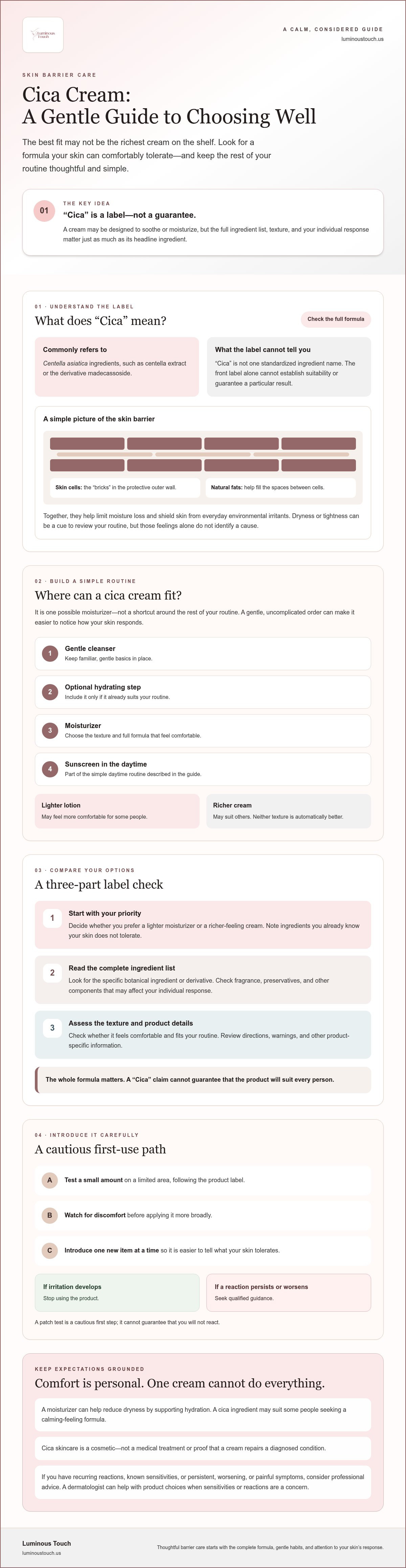
Picture the skin barrier as a protective outer wall: skin cells are the bricks, while natural fats help fill the spaces between them. Together, they help limit moisture loss and shield skin from everyday environmental irritants. When skin feels dry or tight, that can be a cue to review your routine, but those sensations alone don’t identify a cause or diagnose a condition.
A moisturizer can help reduce dryness by supporting hydration, while a cica ingredient may suit some people seeking a calming-feeling formula. No single ingredient restores every person’s barrier. The product’s overall composition, your skin’s needs, and consistent, gentle care all matter.
How Cica Cream Fits Into a Skin-Barrier Routine
A cica cream for skin barrier care is one possible moisturizer, not a shortcut around the rest of your routine. A simple order is: gentle cleanser, optional hydrating step, moisturizer, then sunscreen in the daytime. Choose products by how the full formula and texture suit your skin, not by one headline ingredient. A light lotion may feel more comfortable for some people, while a richer cream may suit others. Neither texture is automatically better.
For broader context, cica cream for sensitive skin discusses how to incorporate these products into skincare. Your own response still matters, so follow product directions and introduce just one new item at a time.
How should you introduce a new Cica cream?
Test a small amount on a limited area of skin first, following the product label, and watch for discomfort before applying it more broadly. A patch test can’t guarantee you won’t react, but it offers a cautious first step. If irritation develops, stop using the product. Seek qualified guidance if a reaction persists or worsens.
How can you keep barrier care simple?
Keep familiar, gentle basics in place while testing a new cream. Avoid adding several active ingredients at once, since that can make it harder to tell what your skin tolerates. If you’re considering the Centellian 24 Madeca Cream as a related moisturizer, review its current listing, ingredient information, and claims. It isn’t confirmed here as a Cica cream.
When browsing Luminous Touch’s Korean skincare selection, use the same careful approach: check the current product details before deciding whether an item fits your routine.
How to Choose a Cica Cream for Your Skin
Choose by your skin’s needs and the whole formula, not by the promise implied by a front-label “Cica” claim. Use this sequence to narrow your options:
- Identify your priority: Decide whether you want a lighter moisturizer or a richer-feeling cream. Note any ingredients you already know your skin doesn’t tolerate.
- Read the full ingredient list: Look for the specific botanical ingredient or derivative. Check for fragrance, preservatives, and other components that may affect your individual response.
- Assess the texture: Consider whether it feels comfortable on your skin and fits easily into your existing routine.
A cica cream for skin barrier care isn’t automatically suitable just because its label highlights Cica. Ingredient labels can’t guarantee the same response for every user. If you’ve had recurring reactions or have known sensitivities, consider discussing product choices with a dermatologist rather than relying on the label alone.
Which formula details should you check?
Review the complete ingredient list, directions, warnings, and other product-specific information before use. Front-label wording may spotlight one ingredient, while the overall formula includes many others. If a product listing doesn’t provide details you need, check the current product information before deciding whether to try it.
Does a Cica cream suit every skin type?
No single formula suits everyone. Texture, the full mix of ingredients, your existing sensitivities, and your personal response all help determine whether a cream feels comfortable. If you’re prone to recurring reactions, a dermatologist can help you consider your options. Introduce products thoughtfully, and don’t treat a “Cica” label as a guarantee of tolerance.
To compare skincare options, explore the Luminous Touch selection and review each product’s current ingredients and directions before choosing.
What to Do for Irritated or Compromised Skin
If discomfort begins after adding a product, pause that new item and simplify your routine rather than layering on more treatments. Occasional dryness or tightness may settle with gentle, familiar skincare, but symptoms alone can’t identify the cause. A cica cream for skin barrier care is still a cosmetic product, not a substitute for diagnosis or prescribed treatment.
When is a simpler routine a sensible next step?
Temporarily avoid products you recently introduced that seem to coincide with irritation. Keep to gentle basics you already tolerate, and follow each product’s directions and warnings. Mild, occasional dryness differs from symptoms that persist, worsen, or become painful. If that happens, seek medical advice from a qualified professional instead of relying on a cosmetic cream to address the problem.
Where can a related moisturizer fit?
If you’re considering another moisturizer, Luminous Touch lists Centellian 24 Madeca Cream as a related option to review. It isn’t confirmed here as a Cica cream or a treatment for irritation. Check the current product listing, ingredient information, directions, and claims before deciding whether it suits your routine.
Let your skin’s response guide your next step, and prioritize professional advice for persistent or worsening concerns. When you’re ready to browse, explore the Luminous Touch skincare selection and review product details carefully before choosing.
Choose a Routine That Feels Right for Your Skin
Cica can be a thoughtful addition to a skincare routine, but the label alone doesn’t tell you whether a cream will suit your skin or address a specific concern. When considering cica cream for skin barrier care, look beyond the headline ingredient: review the complete formula, choose a texture you’re comfortable using, and introduce new products gradually.
Keep your routine gentle and uncomplicated, especially if your skin feels unsettled. Pause newly introduced products that seem to trigger discomfort, and seek professional advice if symptoms persist, worsen, or become painful. Cosmetic skincare can support everyday care, but it isn’t a substitute for medical evaluation or prescribed treatment.
Luminous Touch offers a curated range of Korean skincare products, including Centellian 24 Madeca Cream Time Reverse as a related moisturizer to investigate. Review its current listing and ingredient details before deciding; it isn’t confirmed as a Cica cream. Explore the curated skincare selection and take your time choosing products that fit your needs. A calm, considered routine is a worthwhile place to begin.
Frequently Asked Questions
What does Cica cream do for the skin barrier?
Cica cream may help soothe the feel of irritated skin while moisturizing, depending on its complete formula. “Cica” commonly refers to skincare ingredients associated with Centella asiatica, but products can contain different extracts or derivatives alongside other ingredients. The cream is one possible part of barrier care, not a replacement for a gentle routine or a guarantee of a particular result.
Can Cica cream repair a damaged skin barrier?
A Cica cream may support comfortable, moisturized skin, but you can’t assume it will repair a damaged barrier or treat an underlying condition. The term “Cica” on a label doesn’t establish a product’s suitability or medical effect. If symptoms are persistent, worsening, or painful, seek advice from a qualified healthcare professional rather than relying on a cosmetic moisturizer alone.
How do you use Cica cream in a skincare routine?
Use Cica cream after cleansing and any optional hydrating step, following the product’s directions. In the daytime, apply sunscreen as the final skincare step. Introduce the cream on its own rather than adding several new products at once, so you can better notice how your skin responds. The texture and full ingredient list matter, too, so choose a formula that feels comfortable.
Is Cica cream suitable for sensitive skin?
Some people with sensitive skin may find a Cica cream comfortable, but suitability depends on the entire formula and individual response. Fragrance, preservatives, or other ingredients may not suit everyone. Check the full ingredient list and product directions, then test a small area before wider use. A “Cica” label can’t guarantee that every user will respond the same way.
What should you do if a Cica cream irritates your skin?
Stop using the cream if irritation develops, and simplify your routine by pausing other newly introduced products that may be contributing. Follow product directions and avoid adding multiple new actives while your skin feels unsettled. If discomfort persists, worsens, or becomes painful, seek professional medical advice. A cosmetic cream isn’t a substitute for diagnosis or prescribed treatment.